Wonderment S1E5 - On the Road
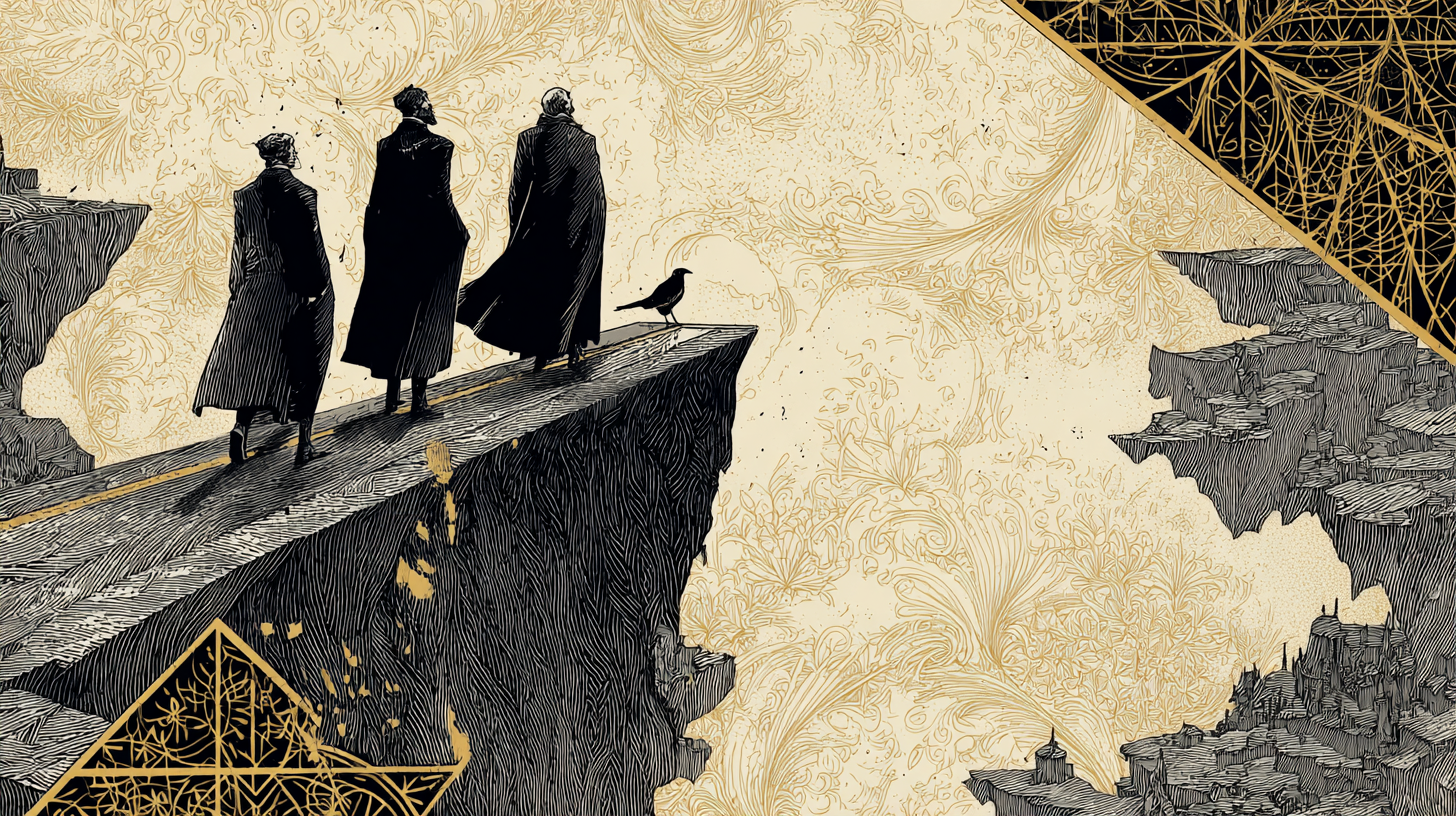
“The preparations seem to be in order, mostly,” a servant said nervously as Charles strode into the courtyard in a glitter of buckles, velvet, and self-importance, his sleeves too fine for war and his expression grave enough to suggest he hoped he’d be mistaken for history. “As per your instructions, when your speech concludes, several hundred doves will be released. We are still trying to capture the doves.”
The servant trailed off as Charles raised his hand for silence. “Excellent,” Charles said, “and I’ve just remembered. Give the courtiers who will be viewing from the castle walls flower petals, so that their approval might rain down upon us.”
“Flowers?” the servant stammered.
“Yes,” Charles affirmed, “a lot of flowers. I mean a ton of them.”
“But we haven’t finished catching the…” the servant begged, but he stopped as Sir Godwin glowered at him. “Very good, m’lord.” He turned to go.
Charles called after him, “Let’s have everything ready to go in thirty minutes or so. Our departure is imminent.” The servant’s face contorted in response to the impossibility of his task, but he dared not push the issue further.
Charles was in a foul mood. He had barely slept. Wonderment was a bit better off. He and Rafferty had woken early and helped themselves to an unattended mead storeroom. The two sat on large stones from the castle’s fallen rampart, where they laughed and reminisced. It was a welcome reprieve from the past few days that had made even simple facts feel negotiable. When they noticed Charles approaching, they stopped speaking, and their faces went blank.
“Ah, it’s a lovely morning. Isn’t it, lads?” Charles asked.
“Ey,” Rafferty confirmed flatly, “the weather is great.”
“This feels just like old times, no?” Charles asked, sounding like a man who needed the past to agree with him. “The three of us, suited up and ready for battle, riding out at first light!”
“Pity Arjun couldn’t join us,” Wonderment muttered.
Charles pretended not to hear, though his jaw tightened as if the name itself had passed too near to him. He continued, “It’s about time to mount up! I’ve had a boy bring two of my finest steeds around for you. Go. Take them. We assemble before the outer gate promptly.”
Wonderment nodded slowly, and he stood. The ground wavered slightly beneath his feet. As he and Rafferty grabbed their packs and found their horses, a steady stream of courtiers and villagers gathered near the gate. Some stood atop the walls. Others approached to pat the horses. The boy who delivered their own horses also handed each an ornate lance. Before long, all members of the expedition were gathered, with Charles at their fore. Rafferty was relieved to see that Sir Godwin was not among their number. The church bells in the town below the castle rang out at nine o’clock, and Charles cleared his throat.
“Ladies and gentlemen, today we witness history,” Charles began. Cheers followed.
“I have been very busy organizing today’s sendoff, as you can imagine,” Charles said, “and so I haven’t prepared a speech!”
“Most important part, though,” Rafferty muttered to Wonderment.
“Oh, wait a moment,” Charles cried, “what’s this?”
Lady Julianna, blazing in a red gown the color of sealing wax, forced her way through the courtiers, a white scarf clenched in one fist like a token of surrender. She slipped between the mounted men before anyone could stop her.
“It seems Lady Julianna has come to bestow her favor on one of you lucky lads,” Charles announced with evident glee. “I wonder who the fortunate young man might be!”
“Oh god,” Rafferty groaned.
Lady Julianna came to stand before Wonderment and Rafferty. There was a moment of tense silence.
“Lower your lance, now, don’t be rude,” Charles mocked like a schoolyard bully. “It is customary for a courtly lady to tie her scarf about her chosen one’s lance.”
Rafferty sighed heavily and lowered the tip of his lance so that it came within her reach. Again, there was silence. Lady Julianna didn’t move; her arms hung motionless, half-extended. Rafferty was confused. Her gaze, fiery, turned to Wonderment. Wonderment sucked in his breath, and he slowly lowered his lance.
“Switch hands,” Lady Julianna hissed at him, her voice commanding, almost defiant.
Wonderment looked at her quizzically, then figured out what she meant. He raised his lance, changed it to his other hand, and lowered it again so that its tip was closer to her. Rafferty had stopped paying attention. He was looking at something off in the distance. Then, with a certain artful slowness, Lady Julianna tied her scarf around both lances, joining them.
“Well, this certainly is unusual,” Charles cackled.
Lady Julianna curtsied to Wonderment and Rafferty, and then stomped off, shoulder-checking the snout of another man’s horse as she did so.
Wonderment and Rafferty looked at each other. They both began moving their lances into a more comfortable position.
“Don’t,” hissed the man next to Rafferty. “It’ll rip. Grave offense. Who knows what Lady Julianna would do? You must ride out like that.”
Wonderment groaned. His shoulder was already starting to burn.
“Well, I think that was a good speech, don’t you?” Charles asked no one in particular. “I say we set off.”
Several anxious servants correctly recognized this as the end of the ceremony and let loose the doves they had captured. There were seven. They rose in a confused burst above Charles’s head, flashing in the sun like a miracle that had arrived short-staffed. For a moment, the seven birds looked almost sufficient, their white feathers catching the sun with a brightness that briefly redeemed the ceremony. Wonderment found it quite nice. The crowd cheered again, and somewhere nearer the castle a drum began to pound. Charles let out a cry and proceeded to spur his horse through the castle’s open gate. As he did, the people standing on the walls began to toss flower petals down onto the expedition. Or at least they started as flower petals. The servants hadn’t had enough time to gather flowers, and so they had substituted them for bushels of grass clippings, which had been piled near the castle’s outer wall. The bristling confetti came down in dry green lashings. It slid into collars, stuck at the damp corners of mouths, caught in eyelashes, and worked its way under linen with the intimate malice of insulation. It also made them sneeze. To make matters worse, Wonderment’s lance-bearing shoulder was burning terribly from the exertion of holding his lance extended. Rafferty grimaced as well.
Desperate to be out from under the itching green barrage, Wonderment signaled to Rafferty, and both spurred after Charles with their lances lowered. The others, who numbered about twenty, followed suit. They soared under the heavy iron gates and past the stones marking the entryway. They burst into sunlight so bright the hills seemed lacquered, the road running between grassy slopes that flashed nearly white at their tips. Around a bend in the road, Wonderment caught sight of the village that sat below the castle, and he went sailing past Charles. Charles had pulled off the road, and his horse was grazing lazily. Wonderment pulled off the road and slowed his horse, doubling back. Lady Julianna’s scarf came loose from his lance and was carried away on the breeze.
“Charles, what? Why did you stop?” cried Wonderment.
“Seems to be about lunch time, doesn’t it?” Charles asked in reply. Wonderment scoffed. The group circled around.
“Alright, men,” Charles called, “lay out a nice spread, would you?”
The riders seemed equally frustrated, but they complied. One of the courtiers produced a thick embroidered pillow while blankets bloomed across the grass, and cold meats, cheeses, and silver cups appeared. “Oh, valiant knights, we have embarked upon a heroic quest,” Charles declared from his cushion, with the castle still plainly visible behind him.
There was a murmur of approval. Wonderment and Rafferty stayed near their horses, trying to shake loose the bits of grass that had fallen under their clothing.
“Oh, come here, you two,” Charles scolded. “We have a matter to discuss.”
“As you know, we are seeking out King Author,” Charles explained, “trouble is… we don’t actually know where to find him.”
“What?” asked Rafferty.
“Yeah,” Charles commiserated, “I’m a bit disappointed with my intelligence apparatus as well. My spies aren’t really pulling their weight.”
Very well, thought Wonderment, ceremony had failed; now perhaps they should try public knowledge.
“Let’s split the problem,” he replied, “We’ll go into town. You, Charles, can terrify the square; Rafferty and I will go to the only place where people tell the truth.”
“Do you think anyone there would know?” Charles asked.
“Yeah, Rafferty has a bunch of friends there,” Wonderment said, elbowing Rafferty, “we could ask them.”
Rafferty growled.
To impress the rabble, Charles ordered his party to charge along the lane that pinched its way between leaning timber buildings into the village. A fish-shaped sign removed Sir Bartholomew from his saddle almost immediately. Half the party stopped to help while the other half carried on after Charles. Wonderment and Rafferty had quietly refused Charles’s order to gallop into town, and they instead dismounted and walked their horses in at a leisurely pace. When Charles arrived at the center of town, he was shocked to find that he had already lost half of his forces.
Slowly, knights began to trickle into the town’s center, followed, after a time, by two knights who carried Sir Bartholomew with them. The men formed a circle around Charles and waited for his instructions. As this regrouping unfolded, Rafferty and Wonderment remained outside the ring.
“Sir Bartholomew’s gone and bonked ‘is ‘ead,” one of the knights, a short man with a fiery red beard, named Rolland, called to Charles. “What’d yuh want us to do with ‘im?”
“Send for the villager healer,” Charles said, “and take him to the inn.”
Rolland and another knight carried Sir Bartholomew off, and Charles returned to the task at hand. “Men, I want you to gather the peasants. Don’t gather the village healer or staff at the inn because they’re otherwise occupied, obviously. Everyone else, bring them here.”
“Come on,” Rafferty said, elbowing Wonderment to get his attention. “Let’s get to the pub before these morons can clear it out.”
They both hitched their horses to the cattle pen fence at the town center and set off toward the pub, leaving behind the clamor of Charles’s gathering. The mud underfoot was just as goopy as Wonderment remembered. While they walked, they were passed by a steady flow of peasants in dirty work clothing heading toward whatever Charles had planned at the center of town.
“What do you make of Lady Julianna giving us her favor?” Wonderment asked Rafferty.
“I told you she was trouble,” Rafferty replied, “the very first time you met her, I told you.”
“I thought she just stabbed you with a pin. What really happened?”
“Don’t want to talk about it,” Rafferty replied. Wonderment glanced sideways at him.
Stepping inside the pub, Wonderment and Rafferty ducked through the low door. Wonderment didn’t bother to wipe the mud off his shoes this time. The pub was filled with the same group who had been there before. Firelight glazed the beams with amber, and the air held the mingled smells of yeast, mud, and onions. The bartender waved at them. Just as they entered, a man brushed past, moving quickly, head darting to either side, like someone expecting to be ambushed. Wonderment looked over his shoulder and noticed his outfit. He moved in a blur of straps and blackened cloth, festooned with pouches, buckles, and odd lenses that caught the firelight in swampy green flashes, as if he had raided a barracks from the future and put his spoils on in the dark. Though he couldn’t be sure, Wonderment suspected it was Seamus under all that kit.
“Rafferty, was that Seamus?” Wonderment asked.
“What?” Rafferty was already at the bar.
Wonderment looked back, but the man had vanished; the glimpse lodged in his mind like a splinter. He filed it away, certain it would become relevant later. He continued over to Rafferty, and the bartender recognized him.
“Oh, hey, it’s you,” the bartender said. “Would you care to have a look at my wares? Warm food to drive away the cold? A cold drink to warm the cockles of your hearts?”
“Updated dialogue,” Rafferty muttered and ordered drinks. “What are we here for again?”
“We’re supposed to find King Author’s place.” Wonderment turned to the bartender. “Was that Seamus?”
“Seamus,” the bartender replied, “I haven’t seen him for a while. He only came in once after he was here with you. He seemed to have changed a bit.”
“Changed?” cried Jameson, who once again was just on Wonderment’s left, though Wonderment hadn’t noticed until now. “He’s a new person, and not for the better, mind you!”
“How do you mean?” Wonderment asked.
“Seamus has gone shifty,” Jameson replied. “He was my best mate for years. He loved his sheep. He loved his mucking. He loved his chorin’.”
“Don’t remind me,” Rafferty grumbled.
“Now he just blathers on about the nature of things,” Jameson continued. “He won’t stop asking about the meaning of it all and why things ‘ave gotta be as they are.”
“That doesn’t sound so bad.”
Wonderment frowned. Rafferty took a gulp from his mug. Jameson clicked at them in distaste and turned back to the person he had been speaking with before, quickly becoming engrossed in a debate about the recent tax hike on flour.
“Uh, so…” Wonderment said to the bartender. “Happen to know the way to King Author’s kingdom?”
This time, as chatter died, Wonderment wasn’t surprised. He felt the pub’s eyes turn to them. Rafferty sighed.
“More shady business!” Jameson called. Wonderment thumbed his nose and turned back to the bartender.
The bartender said, “Don’t suppose I do. I’m afraid all I can offer you is another pint.”
Wonderment turned to Rafferty, about to suggest they take the bartender up on his offer, when the next interruption arrived: an earsplitting “pssttt” came from just over his shoulder. He could feel his neck spattered with a mist of saliva. Wonderment whipped around and found himself face-to-face with someone bundled in a black cloak, shiny with old grease and smoke, the hood pulled so low that only a wedge of chin and the occasional glint of teeth appeared beneath.
“Who’s this spook?” Rafferty asked, clearly not caring if he offended the new arrival.
“I hear you want information about Author’s kingdom,” a whisper emanating from the cloak said.
“Obviously,” Wonderment replied.
“Follow,” the whisper commanded.
Wonderment stepped away from the bar, taking his mug with him. Rafferty grunted and stood up with such force that he sent his barstool toppling backward. It smacked the floor, and he didn’t bother to pick it up. The cloaked figure led them to a set of stairs at the far side of the room and up to a small balcony with several doors along the wall. Behind one of these doors, they found themselves in a cramped room where a group was playing cards. When the cloaked figure entered, the group froze. They set down their cards without hesitation, bowed, and left the room.
“Now that we’re alone, I may be able to help you,” the figure said, “for a price.”
“Name your price,” Wonderment replied.
Rafferty slammed a bag of gold coins down on the table, scattering the cards.
“Where did you…” Wonderment said before stopping himself.
“Again, don’t wanna talk about it,” Rafferty said to him with the tone of a man who very much did but had decided on principle not to.
Wonderment felt a little pushed aside, but the stranger eagerly snatched the bag off the table.
“Author’s kingdom can’t be reached by conventional means,” the figure began.
“Do we need a boat or something?” Rafferty asked.
“Maybe,” the hooded individual replied, “but that is not for me to say.”
“You’re being vague,” Wonderment snapped.
“One must be vague, for the way is different each time,” they said, “you must set out on your own heading, follow your own guidance, observe that which you can, and the way shall open to you.”
“So, we wasted our money?” Wonderment asked.
“That depends,” the stranger said, “on whether you choose to act upon my words.”
“You haven’t told us anything,” Wonderment said.
“I have,” the stranger continued, “I have told you that if you wish to find Author’s kingdom, no one can guide you there; the road behaves differently for every story that tries to use it. You must set out into the unknown and allow yourself to be the guide. Trust in your senses and where they lead you.”
“Well, I suppose that is kind of nice,” Wonderment replied, taking a sip from his mug, “but I was hoping for a compass heading.”
“You will know the way,” the cloaked figure said. Rafferty and Wonderment might have pressed the mysterious individual for more answers, but a horn sounded somewhere outside.
“Come on,” Wonderment said to Rafferty, “it’s time to go.”
“Hold on. I paid this fool! I want my money’s worth!”
With those words, Rafferty snatched the top of the figure’s cloak and pulled the hood down. A rather frightened-looking young woman stood before them. Her hair was unusually long, and two woven braids fell to her mid-back. Wonderment was about to ask her who she was when she dropped into a crouch and swept Rafferty’s feet out from under him with a swift kick. Rafferty thudded heavily onto his backside, but he didn’t spill his drink. Before Wonderment could even raise his guard, she had slipped out of the room, leaving the two of them in a stunned silence.
Charles, meanwhile, had his men assemble an elevated platform out of some wooden crates from a nearby smithy that he assumed could serve no greater purpose. He climbed to the top of them and watched as his noblemen went from house to house, gathering the village’s populace into the square. Most were entirely willing, eager even, to have an excuse to abandon their chores in the middle of the day. Some hoped that, perhaps, he had come to listen to their troubles. They arrived in aprons, muddy boots, half-buttoned tunics, straw in their hair, squinting upward as though royalty was just another kind of weather. Charles called to them, “It is I, your king!”
“We remember you,” a hunched woman in the front row called out.
“Yes indeed,” Charles replied, “for it was in this village where I first arrived!”
“How have you fared? Have things improved since my coronation?”
“You raised our taxes,” shouted one of the bakers who had appeared in court earlier. Though true, Charles’s tax hike on flour had brought the bakers of the city closer, regardless of their proclivities toward slicing. Charles frowned.
“You docked my pay! Why?” called the cordwainer.
“Well, that’s simple,” Charles replied, “your rope is obviously subpar.”
“I don’t make rope,” replied the cordwainer.
“Maybe that’s it,” Charles said. “Cordwainer—cord—shouldn’t you make cord? I have no use for a ‘wainer,’ whatever that might be.”
The cordwainer just shook his head.
“Not my concern now,” Charles yelled.
“Well, you asked,” the woman said.
“Never mind. Who knows the road to Sir Author’s kingdom?”
Silence fell over the crowd as most villagers looked at each other uncertainly. Two men in the back continued arguing loudly about whether it was rude for one to allow his chickens to roam free on the other’s lot. Charles shot them a dirty look, and one of his nobles walked over to politely shush them. Meanwhile, two peasants near the front row started whispering to each other, “Do you suppose there will be a reward for helping him?”
“Oh, you’re right,” responded an older man with a gleam in his eye. A murmur passed through the crowd as the rumor spread.
“We should be helpful,” he said to the man next to him. He stepped forward.
“I’ve ‘erd a ‘at place,” he called. “It’s a week’s ride along the north road.”
“Wait a minute now,” a short, heavyset man interjected. “It’s about a week’s ride along the south road.”
“Ya might ‘ave some trouble though,” a woman yelled, “horses won’t walk on that road.”
“What nonsense is this?” asked the first man.
“And you can only travel the road at night,” a youth who grasped what was happening cried.
“Well, that’s fairly imaginative,” Charles muttered. “You there, Sir… whatever your name was, I want you to start taking notes.”
The noble Charles referred to didn’t have any paper, but he found a stick and started writing letters in the mud, hoping that he would have an opportunity to take them down later.
“Anyone else?” called Charles. “Who actually knows the way?”
“It’ll be easy to find,” a woman said. “There are signs at all the turns.”
“My aunt dreamt of that place. That’s a sign!” another young woman added.
At about this time, the entire crowd burst into an argument. There was a bit of shoving, which quickly escalated as several of the rowdier youths began scooping up handfuls of mud and lobbing them at one another, hitting several villagers in the crossfire.
“Men, sort them out,” Charles called, gesturing at the youths. Several of his noblemen, wearing reluctant expressions, waded into the fray and began scooping up mud themselves, aiming at the rowdy youths. The youths laughed and returned fire, while villagers nearby dodged or shouted. Soon, the nobles were covered in a thick layer of grime. During the chaos, several nobles accidentally stumbled over the notes written in the mud. Charles narrowly sidestepped a flying glob.
“Calm now, calm,” Charles urged.
Wonderment and Rafferty entered the town square near the back of the crowd.
“What’s going on?” Wonderment asked a farmhand standing nearby.
“It’s the king,” the man replied, “he’s asking about the location of a kingdom. He’s going to reward us!”
“Somehow I doubt it,” Wonderment replied. “He’s just using you as a search engine.”
“A siege engine?”
Wonderment didn’t answer and cut his way through the crowd in Charles’s direction.
Charles spotted him and called out, “Let that man through.”
The peasants complied, parting so that Wonderment had a clear path. He marched through the masses and up to Charles.
“Did you learn anything?” Wonderment asked him.
“Why yes,” Charles replied. “We’re just wrapping up a brilliant intelligence gathering operation.”
“That’s good,” Wonderment said. “We got only a cryptic pep talk.”
“Ah,” Charles replied, “disappointing.”
“Can we get out of here?” Rafferty asked. “I’ve begun entertaining the notion that the agrarian way of life might be preferable to all this nonsense.”
“Alright then,” Charles said. “Men,” he yelled, “move out.”
Their procession looked like a troop that had seen battle. Sir Bartholomew was carried in a makeshift sling and dragged along the ground behind a horse. The garments of at least half of the nobles, dazzlingly clean that morning, were covered in mud. One of the banners carried by the party had been snapped in the commotion, and its flag and tip were bent sideways. Despite all this, Charles remained undeterred. Wonderment rode at his side.
“I’ve learned that it’s either along the north road or the south road,” Charles said. “There are plenty of signposts on the way. And you? Tell me about this motivational speech.”
“Rafferty and I met a shady individual in the pub.”
“Hah,” Charles exclaimed. “All good stories begin that way.”
“Uh… sure. So, this shady character turned out to be a young woman.”
“Young woman, you say?” Charles asked. “Don’t forget you have pledged your loyalty to Lady Julianna. It makes me so happy to see blossoming love in my court. Wonderment. Do not disappoint me.” Wonderment felt himself blushing.
“This woman said we can head out in any direction.” Wonderment decided it wasn’t worth the effort to argue with Charles about courtly love. “She said we will know the right way when we see it and that we should trust our instincts.”
“Well, that’s vague,” Charles replied. “At any rate, we can just follow the north road. We should reach the edge of the continent in 3 months’ time. If that fails, we’ll just turn around and head south.”
“3 months,” Rafferty groaned from somewhere behind.
“Chin up, lads,” Charles called to the entire troop. “I have a good feeling about this direction in particular! I’m sure we’ll reach the domain of King Author in no time.”
With that, he spurred his horse and led the procession along the north road. The road was wide enough for them to ride three abreast, and it cut its way through rolling hills. They passed the moors Wonderment and Rafferty had traversed earlier. A time later, they glimpsed a sprawling forest, but the road kept them a fair distance from its depths. Further in the distance, the white-capped peaks of a mountain range were visible. Their ridgeline was oddly familiar to Wonderment, and he tried to remember if he had seen them before, so many centuries in the future. Yet he couldn’t bring a name to mind. Wayfinding was easy, as all the branches off the main road were little more than footpaths, clearly not leading to any notable place. Rafferty passed the time by trying to get to know the nobles he traveled with. After interviewing half the troop, Rafferty concluded that Charles’s court was composed entirely of sons who had fled one tyrant for a more entertaining one.
The first real obstacle was a fork in the road. It was a simple Y-split with both paths leading off as far as the eye could see into green pastures, their vibrancy dulled by the heavy gray cloud cover. At their center was a signpost, more specifically, what remained of a signpost. It had clearly been sawn off halfway up, leaving only a post in the ground. Nearby stood a man in a coat over-trimmed with white fur that burst from his cuffs, collar, and hem in greasy tufts. His cart and tired donkey looked scarcely more reputable than he did. When he saw their party, he hailed them.
“You there,” the man called, “mighty adventurers! Might I have a word?”
Charles signaled for the party to come to a halt. The man drove the cart up to them, the tired donkey shambling before it. When he was close enough that he didn’t have to shout, he asked, “Fine, noble men! Where dost thou travel?”
“That, good sir,” Charles replied, “is a state secret.”
The man looked pleased.
“Oh, forgive me,” the man said, “I do not wish to pry. Why, I only wish to aid one so great as thyself.”
“But you don’t even know who I am,” Charles replied with a touch of disdain.
“Your boots don’t have holes,” the man explained, “you’re clearly somebody.”
“This is the king,” Sir Bartholomew, newly patriotic in proportion to his concussion, shouted from the stretcher.
“Why, the king,” the man cried. He bowed deeply. “Forgive me, your majesty! As I said, I only wish to aid you in your quest, that is, in finding wherever it is that you want to go.”
“Guess that lady was right,” Wonderment whispered to Rafferty. Rafferty replied with a cynical glare.
Charles thought for a moment. “Alright then, are you a mapmaker, or a wanderer?”
“I am but a humble merchant,” the man replied. “My trade is signs.”
“Signs?” asked Charles. “You make signs?”
“I’m more of a retailer,” the man answered. “I have signs of all varieties. Signs that will lead you to any place you’d care to visit. If there is a way you’re seeking, I will certainly have a sign that can help.” With that, the man pulled the cover on his wagon back. Inside was a wooden tangle of destinations, arrows, posts, and painted boards, their chipped lettering promising mills, inns, and the odd hamlet. Wonderment noticed a rusty saw sitting on the driver’s bench.
“That man is stealing road signs,” Wonderment said matter-of-factly.
Charles pretended not to hear, and he began to admire the man’s wares from afar.
Wonderment rolled his eyes.
“Do you happen to know the way to Sir Author’s kingdom?” Charles asked, spilling his state secrets with only the faintest provocation.
The merchant brought his hand to his chin and appeared to ponder the question. “Author’s kingdom, Author’s kingdom,” he repeated to himself. Then he appeared to realize something, dramatically.
“I do believe I have a sign that might help you find the way,” the man said, “but you should know that location is very in demand these days. Such information commands a premium.”
At last, for the first time all day, someone offered a lie with a usable shape.
“I am the King!” Charles exclaimed. “I can afford any price you might demand.”
“Charles,” Wonderment said.
Charles glanced over.
“This man is clearly going around cutting down signs,” Wonderment explained calmly. “Don’t pay him for doing that.”
“Merchant, is this true?” Charles demanded. “Have you been going around cutting down signs?”
“Preposterous,” the merchant roared.
“Look, he has a saw right there!” Wonderment gestured toward the cart.
“That’s not a saw,” the merchant blustered, “it’s a civic reclamation device.”
“Not a saw?” Wonderment asked. “Not a saw?”
The merchant said nothing.
“Fine then,” Wonderment said. “Why don’t you tell us which of your signs belongs to that post over there?”
The merchant glanced at the nearby post, then at the wagon, then back at Wonderment. “I sell many signs.”
“I’m sure you do,” said Wonderment, “though I have no idea who your clientele might be. But only one sign was sitting there half an hour ago.”
Charles straightened in the saddle. “Yes. A professional merchant should be able to identify the proper sign.”
“I do not see how…” the man began.
“If he cannot,” Wonderment said, “then he is a dilettante. I suggest we put him there in the sign’s stead. He can point left with one arm and right with the other.”
The merchant blanched. “Your majesty!”
“A living sign,” Charles said thoughtfully. “Efficient.”
“Very effective,” said Wonderment. “More expensive to maintain than wood, but much better at answering questions.”
“Left,” the merchant blurted. “The left road. That’s the road your sort always takes.”
“Our sort?” asked Rafferty.
“Men looking for kingdoms that no one’s heard of. Scholars, prophecy-drunk idiots, one fellow with six maps. They all go left first. Then west after the crumbling tower.”
Wonderment regarded him. “And the sign?”
With the air of a man who had suffered professional defeat, the merchant climbed into the cart, hauled out the missing sign, and dragged it back toward the severed post.
“There,” Wonderment said to Charles. “We have our heading.”
“Indeed,” Charles said, smiling with satisfaction. “Please put all of those back where you found them,” Charles called to the merchant, who seemed very happy to have avoided being assigned to the role of signpost.
The left road was level and clear for a long way, and the companions were able to travel at a trot. For a while, the road offered nothing but grassland and distance; only the weather began to change. It had been overcast when they parted ways with the dubious sign salesman, but a short time later, the weather was remarkably clear. Then, just as quickly, the sky became stormy. The clouds above thickened into a black, slow-heaving mass, veined now and then with pale internal light, as though something enormous was trying to escape them. Charles glanced at them with concern but urged the party forward. At one point, Wonderment glanced back the way they had come, and the sight made him nauseous. There was absolutely nothing that distinguished the road ahead from the road behind. Both seemed to stretch on infinitely. Wonderment pointed this out to Rafferty, who replied simply, “I don’t want to think about it.”
There was a sudden headwind. It tugged at their shirtsleeves, and the banners carried by the party flapped loudly. One banner, damaged earlier, snapped and was left in the mud behind them. Rain seemed imminent. A crackle erupted overhead, and a huge streak of lightning etched across the blackened sky. There was no shelter in sight, and everyone feared they would be caught in a downpour. Charles called out, “Ride quickly now! Let’s try to outrun this gale.”
They spurred their horses against the wind. Wonderment tried to shield his eyes, though there was no dust, just empty air thick with moisture. The further they went, the lower the clouds seemed to hang. It was almost as if the clouds might come to rest on the ground if they went far enough. The thunder and lightning intensified, and they could feel static in the air just above their heads. But it did not rain. Night settled on them, far earlier than it should have, and before long, they were traveling in total darkness. Several nobles attempted to light torches, but the wind quickly snuffed out the weak flames. “Onward,” Charles roared, but he was barely audible above the wind. The mud beneath the horse’s hooves turned to gravel, which made a squishing, crunching sound as it was trodden on.
Wonderment glanced to his left and found it difficult to see the riders next to him. A thick fog, like smoke from a diesel fire, drifted between them. While he was contemplating this, a white piece of fabric caught in the gale blew across his face, blinding him. It smelled vaguely familiar. Wonderment almost ran into the rider in front of him, who had slowed suddenly. “Whoa,” Wonderment cried, “men, dismount!”
They came to a stop. Charles had dismounted. Wonderment tucked the white cloth into a saddle bag and swung off his horse. He was surprised when the landing stung his ankles. The ground was now rocky and hard. He approached Charles, whose earlier excitement had evaporated.
“We continue from here on foot,” Wonderment said. Charles nodded. All around, the other riders were dismounting. Just as the final pair of boots landed on the earth, there came a great whooshing sound. The low-hanging clouds around them were yanked upward by unseen strings. They thinned rapidly and then dispersed in all directions, like a startled flock of crows. In moments, night melted into a bright afternoon, though the landscape had changed entirely. The party now stood on a lane of packed rock in the foothills of a great mountain range. On one side, the lane dropped sharply into a crag, the depths of which were not visible.
“Odd,” Charles said.
Wonderment scanned the area. The field they had ridden across before was nowhere to be seen.
“There!” Rolland shouted, beard flapping in the wind. “That tower’s as rickety as me grandmum,” he added, pointing. Wonderment followed his gesture, and he saw, on a hilltop above, the ruins of an ancient tower. It had been constructed of heavy, nonuniform stones, as though the rocks of the mountain had been slapped together with mortar. It stretched upward, higher than even Charles’s castle. There were stones missing in places, and Wonderment couldn’t believe it could stand under its own weight. Yet, to his surprise, at the very top of the tower, a torch burned.
“This must be the crumbling tower the merchant spoke of,” Wonderment said to Charles.
“Indeed,” Charles replied, “the way west must be just ahead.”
“Just a moment,” called Rafferty. He led his horse up to them, all the while gazing at the tower with narrowed, appraising eyes. It stood alone on a low rise, an old stack of cracked stone with weeds in it, leaning just enough to suggest that it had been reconsidering its career for some time. Ivy had entirely claimed one side, and a seam ran down the masonry like an old scar. Rafferty continued, “I think we should climb it.”
“Sir Rafferty,” Charles said, “this tower is collapsing.”
“Precisely,” Rafferty said. “An ordinary man would avoid it. A king in search of King Author ought to be willing to climb it.”
Wonderment supposed Rafferty was bored, but he didn’t find that explanation entirely satisfying. He wondered what Rafferty was planning. Charles, on the other hand, heard only the part where he could distinguish himself from ordinary men.
“We shall ascend,” Charles ordered. Rafferty smiled. Without a second thought, Charles thrust his horse’s reins into a nearby noble’s hands and climbed the rocky embankment toward the tower.
“What are you playing at?” Wonderment asked Rafferty.
“I think…” answered Rafferty. Then he paused. “I think I want Charles to feel some of the danger we’ve been feeling. Maybe that’s it.”
He didn’t explain anything more but instead followed Charles up the embankment. Wonderment decided to follow at a distance. At the base of the tower was a doorway half-choked with nettles. Charles entered first, trying to maintain a dignified poise, but his elegant cloak snagged on one of the nettles. Rafferty glanced back to see if Wonderment was following, smirked, and then freed Charles’s cloak without commenting. Inside, the air was cool, a bit moldy, and carried the mineral smell of long-sealed places. A narrow spiral stair built into the wall curved upward to their right.
“Ah, these old fortifications, built to last,” Charles said as he set a boot on the lowest step. It shifted slightly under his weight with a dry crunch. He froze.
“Best to be light on our feet,” Rafferty said.
“Quite right,” Charles replied, trying to sound nonchalant, but failing to mask the tremor in his voice.
As they slowly ascended, the interior seemed to tighten around them and grow darker. Around and around they went. Aside from the occasional arrow slit, it was impossible to judge how far they had climbed. It felt further than it should have; the interior bore no relation to the exterior’s appearance. All the while, they were greeted by the sounds of crumbling mortar, the rustle of animals who now inhabited the tower, and the faint tick of grit descending through the darkness to the stone floor below. The three came upon a section where three steps had broken away, leaving a narrow crescent of stone along the outer wall, with a sheer drop below. Charles hesitated.
“Hmm,” Rafferty said, moving alongside him.
“Men of action do not shy away from a challenge,” Charles whispered, as though he were trying to convince himself.
“Care to demonstrate?” Rafferty asked.
Charles nodded, and he approached the gap. He extended an arm, apparently trying to gauge the distance. He shrugged off his cloak, letting it fall to the floor, and repeated the same action.
“No,” he said at last. “I am confident you are skilled enough to handle this challenge without my demonstration. It shall be a test.”
Rafferty backed up, sprinted toward the gap, and leaped to the steps above with ease. Wonderment did the same. Charles, looking nervous, repeated the action he had seen them take. He cleared the gap with ease and landed gracefully.
“You might not remember,” Rafferty said softly, “but you were always the boldest among us.”
Charles looked at Rafferty as if from a great distance. He appeared as though he were going to say something, but then he turned away and continued to climb. They rounded the tower again, then disturbed a family of pigeons, crows, or some equally indignant avian population. Birds exploded upward through the ruined interior with such ferocity that even Rafferty supposed the tower would collapse. Even more worrying were the tight confines. There was no space in which one man could gracefully flinch without sending another plummeting to his death. Yet the tower and the men remained standing. The stairs finally led to a wooden landing. Across from them was a sturdy-looking ladder, clearly a recent addition. Charles set foot on the wooden platform, and it answered with a long, fibrous groan.
“The king shall go first into danger,” Charles said, his voice shaking. “If I die here, you are to inform the nobles that Sir Hob is my successor.”
“Hob?” asked Wonderment in shock. “Why him?”
“I think he’s turned over a new leaf,” Charles said. “Besides, Sir Godwin would mangle the entire court.”
Charles crept forward. He took one step. Then another. He slowly tested the strength of each step before moving to the next. Halfway through, a board snapped underfoot with a retort like a rifle’s crack. Charles’s leg shot through. Grim shock painted his face. Without a second thought, Wonderment rushed forward and wrapped an arm under his shoulder. The boards underfoot shrieked, but Wonderment hauled Charles up and over to the ladder all the same. Rafferty slowly inched around the perimeter, near the wall, and met them. Charles panted hard for several moments. In a croaking voice, he said, “This tower is a disgrace. When we return, I will order that all ruined towers in the kingdom be repaired.”
“A tall order for a man with no treasury,” Rafferty replied, coldly. Wonderment shot him an annoyed glance.
“That’s exactly the kind of defeatist thinking that prevents greatness,” Charles replied. “But alas, you’re right.”
“Come on,” Wonderment said, his voice adopting a kind tone. Despite everything, he didn’t like that his friend was in danger. “Let’s find your treasure.”
They climbed the ladder in turn and emerged at the tower’s summit – a broken ring of stone open to the wind. Their eyes took a moment to adjust, but when they did, the countryside spread out before them in radiant greens and earthy browns. They stood side by side, comprehending the scenery in silence. Towns below looked like specks. Above them, small plumes of smoke rose. There were fields, tilled in neat rows. The western road intersected with the one they had traveled shortly after the tower and led up into the mountains. Then, they spied something that none of them could understand. To the west, the world simply stopped. It was as though the landscape had been painted upon a canvas, then cut with a razor. A single perfect line sliced through mountains, forests, and fields. Beyond, there was no mist, no distance, only a flat and depthless gray.
“Well,” Charles said, “I don’t care for that at all.”