Wonderment S1E7 - The Royal Rinds
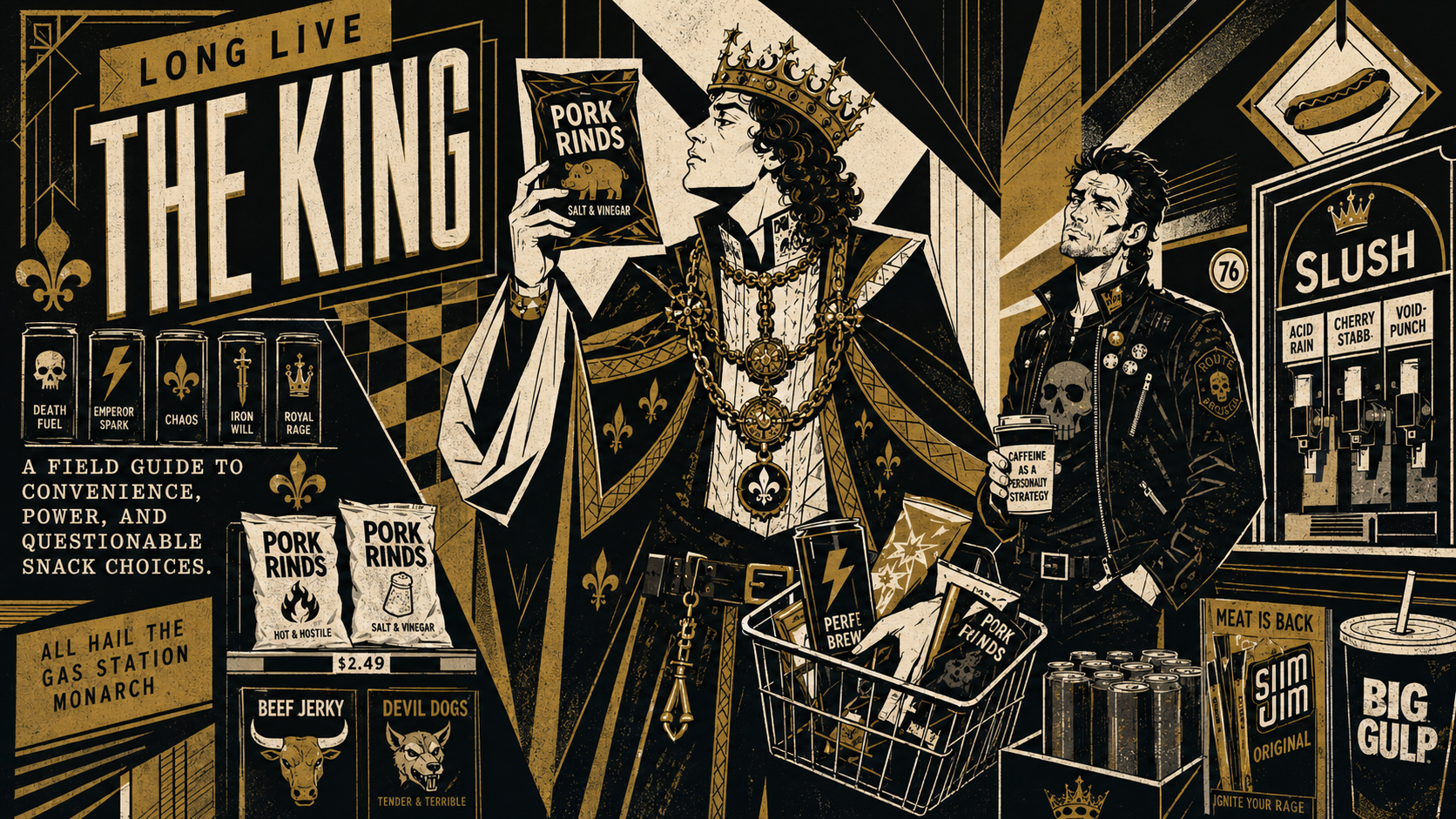
To the Commandant, Argyle VIII Experimental Weapons Containment Directorate,
I am pleased to report that the Wonderment construct has been located, and containment is in progress.
At our last briefing, you were informed that the Wonderment construct had escaped containment after the unfortunate events at the annual Integra Art Auction and Social Mixer. While we are still unsure exactly what transpired, we believe that some form of literary self-awareness on the part of the construct led to a complete narrative collapse. During such events, erratic contextual reframing may occur, allowing the construct to transpose itself into another narrative. Given the vulgar abundance of available narratives, tracking the transposition is functionally impossible.
In this respect, we had a lucky break. The Wonderment construct appears to have transposed itself into an exceptionally well-known narrative: The Legend of King Arthur. We do not believe the construct has regained self-awareness, and we suspect that, for the time being, the repercussions of any actions the construct may take will be relatively insignificant. Given the Arthurian legends’ fictional status, it is unlikely that the construct’s actions will influence reality. We are, of course, deploying measures to ensure this outcome. The first measures are coming online as this letter is being prepared.
Sincerely,
Benjamin Tatum Darius-Pont, PhD
P.S. I submitted my resignation thirty-seven days ago. The continued non-acknowledgment has been noted.
Lancelle stared at Wonderment. He sighed and pressed the heels of his hands into his eyes. He had grown tired of decisions that arrived smelling like burnt rope.
“Rafferty, what do you think?” Wonderment asked.
Rafferty eyed Lancelle. “Out of the frying pan,” he said, with the calm of someone observing a controlled burn.
Charles, who apparently believed diplomacy improved with volume, shouted, “Can you assure us that we will be treated with all the courtesies due to emissaries of a neighboring kingdom?”
Lancelle looked to Bedeveria, then to Wonderment, who rolled his eyes with the weariness of a man asked to notarize a hallucination.
“Yes,” Lancelle said to Charles. “I’m not calling you king, but we’re not going to hurt you.”
Charles appeared smug. He turned to Wonderment and said, “Come on. Chivalry dictates our survival.”
“Honestly, at this point, whatever,” Rafferty muttered. He stalked forward moodily. “I’m riding with Bedeveria. I like her bike.”
“Come on,” Lancelle called to Wonderment. He obeyed. She continued, “Tristana, you’re taking the guy in the dress.”
“I object to that,” Charles yelled, correctly recognizing her command was directed at him. He fell silent as another rider pulled up alongside. Her bike’s rumble was throatier than the others, and he liked it.
“What holy missile is this?” Charles breathed.
“You gonna keep gawking?” Tristana scolded him. “Climb on. Pretend it’s a horse or something.”
Charles approached with the fragile dignity of a court official asked to mount a cannon. He patted the side fairing affectionately while Tristana glared at him through her visor. By the time Charles had mounted the bike, Wonderment and Rafferty had disappeared around a bend in the road. Tristana took off smoothly and then accelerated hard. Charles felt himself being pulled backward, and he clung to the passenger handles.
They descended into a town that prosperity had once passed through, found spiritually undercooked, and abandoned forever. The gang whizzed past a shuttered ski rental and entered a lane of vape shops, payday lenders, and other small mercies of a republic in decline. Lancelle swerved into a seedy-looking gas station and pulled up to a pump. A police cruiser idled near the pumps with all the authority of a scarecrow. Wonderment saw the officer in the driver’s seat quickly avert his gaze, while the officer in the passenger seat opened a newspaper, shielding his face. Wonderment frowned. He noticed Lancelle fiddling with the credit card reader. With a quick twist, she broke off a green piece of plastic designed to accept the user’s card and peeled a clear piece of tape from the inside. A small microchip clung to the tape, tick-like and patient. Bedeveria pulled in behind them, Rafferty on the back, smiling like a schoolboy.
“One of ours?” Bedeveria asked.
“No,” replied Lancelle flatly.
“Damn,” Bedeveria hissed. “They’re pushing further in.”
Tristana rolled in on the Hayabusa, Charles’s whimpers almost audible over the engine. His red cloak flapped madly behind him. Across the street, a large yellow sign with black letters read “King’s Ransom Pawn.” Charles looked up at the sign.
“What did you pull off the pump?” Rafferty asked, gesturing at the microchip on the tape.
“That,” Lancelle replied, crumpling the tape into a small ball and tossing it aside, “is called a skimmer.”
“A skimmer?” Charles asked, practically falling off the bike as he dismounted. “Pray tell, what is a skimmer?”
Wonderment turned on him. “Charles, you know what a credit card skimmer is! Drop the act! Drop it! Enough! Are you trapped in the Middle Ages, Charles, or have you taken shelter there?”
Charles looked at Wonderment, eyes sad. He bowed his head and spoke. “Wonderment, please allow me to do this in my own way, in my own time.”
Wonderment was taken aback by the abrupt lucidity. Confusion crossed his face. He opened his mouth and then shut it again. The eyes of the bikers were trained on them, but no one spoke.
“I’m parched,” Rafferty said at last.
Wonderment realized, with the sudden clarity of the starving, that none of them had eaten or drunk anything in days. They had been living on panic and prophecy, a diet notably deficient in electrolytes.
“Hey, Bedeveria,” Rafferty said, “any chance we can borrow your card?”
“Nope,” Bedeveria replied.
“We’re literally starving.”
“You’re theatrically starving,” Bedeveria said. “That’s not the same thing.”
Bedeveria looked from Rafferty to Charles, then to the pawn shop. She pointed at Charles and said, “He’s wearing a golden chain, a pinky ring, and a sword with a golden hilt. You expect me to believe you’re broke?”
Charles grew flustered. “These are not funds. These are… instruments of office. I will never sell my sword.”
Rafferty rolled his eyes and replied, “Good. Because we’re not selling it.”
Charles relaxed.
“We’re pawning it,” Rafferty added.
“Absolutely not,” Charles hissed.
Bedeveria leaned against her bike. “Then pawn the ring.”
“This ring bears my house’s signet,” Charles wailed.
“Your house is currently hungry,” Rafferty said.
“The chain, then,” Bedeveria suggested.
Charles clutched the chain. “This was given to me by a duchess. It symbolizes…”
“Was she hot?” Bedeveria interrupted.
Charles hesitated.
“Chain it is,” Rafferty muttered.
“This is barbarism,” Charles cried.
“No,” Bedeveria replied. “Barbarism is asking a woman you met an hour ago, who frankly doesn’t like you, to bankroll your gas-station banquet while you stand there dressed like a treasury that learned to complain.”
Inside the pawn shop were elaborate vapes, watches of dubious provenance, and knives whose previous owners had probably not prospered. Charles, entering first, became enraptured with a bass guitar.
“What devilry is this?” he asked.
He hefted the guitar by its neck, personally offended by its refusal to be an axe. “The handle is all wrong. Poorly made, if you ask me.”
“No one did,” replied Rafferty, annoyed. “Come on.”
Charles was fiddling with a pressure washer when a man in a black button-down and ripped jeans asked, “Can I help you, fellas?”
“This device,” Charles said urgently. “Is it for disciplining peasants?”
Rafferty covered his face and moaned, the ancient gesture of every man appointed custodian of a fool.
“That there is a pressure washer,” the storekeeper replied. “And I won’t be asking any questions about who you’re disciplining with what, don’t you worry.” The clerk winked at Charles, laughed, and shot him a finger gun.
“We came,” Rafferty said, “because Charles here wants to pawn his sword.”
“Why didn’t you say so?” the clerk laughed. “Bring it here.”
Charles was eyeing a weed-whacker, clearly preparing to do something that would get them both kicked out, so Rafferty grabbed him by the shoulders and escorted him to the counter.
“Charles,” Rafferty said, already exasperated, “please show this man the sword.”
A large ruby in the hilt caught the light, and the storekeeper briefly saw God. He hid his expression quickly and then eyed the sword skeptically.
“What’s this engraved on the blade?” the storekeeper asked.
Charles cleared his throat, as though preparing for a speech. “It is Latin,” he said, “probably. It reads ‘Cupio, ergo cado’.”
“I went to Cabo once,” the clerk said. “Almost lost my leg.”
He ran a finger along the blade. “Well, the edge is weirdly good. Where did you say you got this? It’s not stolen, is it?”
“Why should someone of my lineage need to steal?” Charles asked, astounded.
“He means it’s a family heirloom,” Rafferty said.
“Hmm…” the clerk paused. “Any paperwork?”
“Paperwork?” asked Charles.
“No,” said Rafferty.
“Is it a replica then?” the clerk asked. “Like a movie prop?”
Charles gasped. “Sir, that blade was forged by the five sages of Scornharth, who met in the gloom and never spoke again after cooling the steel in the mountain’s black spring.”
“That usually hurts resale,” the storekeeper said. “I’m thinking seventy-five.”
“Nice try,” Rafferty replied, his voice low and menacing.
“Fine, ninety-five,” the clerk said.
Rafferty, through methods not entirely diplomatic, talked him up to $125.
“Done,” Rafferty said.
“One hundred twenty-five what?” Charles asked.
“Dollars,” Rafferty said flatly.
“I don’t understand,” Charles said. “Could one raise even a modest army with that amount?”
“It’s enough for lunch,” Rafferty said flatly.
“I demand two dollars more!” Charles said with a wide smile.
“Okay, fine,” the storekeeper said.
“And you must swear that this blade will never be unsheathed by a lesser hand,” Charles continued.
The storekeeper sized Charles up and said, “Done.”
They moved on to the gas station, where row upon row of snacks shone with the confidence of minor deities, their wrappers so spectacularly neon that simply gazing upon them, let alone eating them, might cause a medical emergency.
“Go find something to eat,” Rafferty commanded. “And get something for Wonderment.”
He left Charles’s side then and started looking around. Charles followed him like a duckling in the grip of dynastic ambition, but before he had taken three steps, he was distracted by a yellow bag with a cartoon pig on its front.
“That is a terrible rendition of my kingdom’s crest,” Charles said. “Offensive, really.”
“That,” Rafferty said, “is a bag of pork rinds.”
“What are they?” Charles asked.
“Just try some,” Rafferty said.
Charles popped a pork rind into his mouth and chewed thoughtfully. There was a long moment of silence.
“Acquire eight,” he announced.
Rafferty handed him a shopping basket and went to make himself a coffee from a self-service machine. At the end of the row, Charles found the coolers. In his eyes, the glowing cases were a warrior’s apothecary: potions promising stamina, violence, focus, and lime. When Rafferty came to check on him a few moments later, he found Charles had removed thirty energy drinks from the cooler. He had finished two, and he was working on a third.
“Rafferty,” Charles said, “why does this potion promise violence?”
He held up a can with a rabid dog on its front.
“Charles,” Rafferty said, his voice softening, “Those are for teenagers, night-shift IT workers, and men with warrants.”
“They suit me,” Charles replied.
“Why are you unloading the case?” Rafferty asked. “Please stop.”
“I’m going to figure out how this works,” Charles explained. “It is warm on the outside, but cool on the inside, yet there is no ice. I must understand this sorcery.”
“It’s called Freon,” Rafferty replied. “Seriously, put those back before they make us leave. Besides, I have something to show you.”
After Charles had put the unopened cans back in the cooler, he joined Rafferty in front of a hot dog roller machine.
“How’re those energy drinks treating you?” Rafferty asked.
“I’m vibrating with royal purpose!” Charles cried. “What are these glistening cylinders of meat?”
Rafferty prepared a hot dog for Charles, adding a great variety of toppings in copious quantities. He handed it over. Charles eyed it warily, then, in an agitated rush, devoured the entire thing. Pickle relish and small bits of red onion tumbled down his chin and onto the floor.
“So?” Rafferty asked, beaming.
“This is vile,” Charles answered.
“Yes,” Rafferty laughed.
“And yet, is there a second?”
Charles consumed two more hot dogs. On the second, he took Rafferty’s place at the condiment station and applied an obscene amount of yellow mustard. There was so much mustard that the bun suffered an identity crisis before dissolving.
Charles moved on to a nearby machine crowned with two sludge-filled vats, one blue, one red, each turning on a plastic axle like a carnival prop. In a few moments, his strange, pliable flagon was filled with icy-blue sludge. He added a dose of the red potion to the blue. To his chagrin, the noble potions melded into the brown of a peasant’s tunic.
“Rafferty,” he exclaimed. “This is fantastic.”
Rafferty strolled over, hot dog in one hand, coffee in the other.
“Did you get anything for Wonderment?” Rafferty asked.
“Hold on,” Charles said, holding up a finger, gulping the slushie in his other hand.
“You may wanna slow…,” Rafferty was saying.
Suddenly, Charles’s expression hardened. He winced. He staggered backward, then looked at the styrofoam cup in disbelief. He threw it to the floor, the remainder splattering everywhere.
“This potion has committed treason against the royal skull,” Charles cried. His hand shot to his temple.
“Yeah, you did kind of pound it,” Rafferty replied, disinterested. “Did the Middle Ages not have brain freezes?”
Charles moaned. “Rafferty,” he said breathlessly, “I have been mortally wounded. Should I fall, you must tell Wonderment what has happened. I leave it to you to retrieve my treasure and restore my kingdom.”
“Give it a rest,” Rafferty said.
“Oh,” Charles said after a moment. He blinked curiously. “I appear to have survived the insult.”
“No shit,” said Rafferty.
“What did you get for Wonderment?” Rafferty asked again.
“Let’s see,” Charles said, looking down at the basket. “Well, he certainly won’t be sharing my pork rinds.”
Charles sorted through the snacks. They were all for him, even the small toy car he had picked out.
“Typical,” said Rafferty. He walked off, grabbing two bottles of water and a premade sandwich for Wonderment. He also grabbed a forty-ounce bottle of malt liquor, because civilization, though wounded, had not wholly abandoned him.
Back outside, Lancelle was getting worried. She tried calling again. Percievène’s phone went to voicemail.
“I don’t like it,” she said to Bedeveria. “Where are those idiots?”
“Well, I’m here,” said Wonderment. “What’s going on?”
“Not your concern,” said Bedeveria.
“Well, it might be,” said Lancelle. “Look, Wonderment – it’s Wonderment, right? Let me put this in terms you’ll understand. We’re knights, more or less. For the good kingdom, such as it is. The bad kingdom has knights, too, except their’s will steal your cash and insult your mother. And right now, we’re starting to suspect some of those knights are barreling toward us at high speed.”
“You know I’m a modern man, right?” Wonderment asked. “It’s just Charles who’s stuck.”
“You’re all wearing the livery,” Bedeveria retorted.
“Fair.” Wonderment turned. “Oh, look, there they are.”
Charles and Rafferty exited the station. Charles wore a large shit-eating grin. Rafferty nonchalantly sipped a coffee.
“Oh, I’d kill for a coffee,” Wonderment said.
“Something better,” said Rafferty. He handed Wonderment the sandwich, water bottles, and malt liquor.
“Good enough,” was Wonderment’s only reply.
Lancelle watched them, unwilling to admit that the idiots had begun to resemble a unit.
“Lancelle,” Tristana said, her tone that of an undertaker discussing the finer points. “What’s the word?”
“No word,” Lancelle snapped. “Mount up!”
She’d denied a starving man a peaceful last meal. As Wonderment shoved the last bits of painfully dry bread down his gullet, he swung his leg in a high arc, effortlessly mounting the bike. Then, with the utmost elegance, Wonderment cracked his forty-ounce in Lancelle’s ear.
“Onward, my terrible angel,” he whispered.
Lancelle was utterly unmoved. The idiot had made a statement. Lancelle refused to give it the dignity of interpretation.
Rafferty approached Bedeveria courteously. “May I?”
Bedeveria gave a curt nod in response.
Charles, of course, had the most trouble. He advanced with a hesitant wobble.
“Uh, hello,” he said to Tristana.
Tristana revved her engine. Charles flinched.
“Hun, I need you to become useful in the next thirty seconds,” she said. “We might be heading into something shitty, and I need to know you’ve got my back.”
Charles looked down at his eight bags of pork rinds. He tore one open and thrust a handful into his mouth.
“Tristana,” he said, his mouth full, “this pains me greatly. I forsook my sword for these… trifles. But I forsake these trifles for you now, for our shared cause, which, though not yet articulated, I can sense with a certainty greater than any I have felt before.”
“Thanks, hun,” Tristana said, meeting his eyes as he smacked his lips.
They tore out of the service station as a gentle rain began, making the asphalt glassy, the headlights smearing across it like oil on a knife. The engines howled through the gorge like iron wolves. They moved fast, but not recklessly. Wonderment clung to Lancelle’s jacket, trying to look brave yet clearly aware of his own mortality. Rafferty was more comfortable. He leaned in time with Bedeveria, who was quietly grateful for a passenger who seemed to know what he was doing. Charles, unfortunately, was having trouble adapting. He sat stiff-backed behind Tristana, posting on the motorcycle as if the machine might respect horsemanship.
“Lean with the bike,” Tristana shouted at him over the wind.
Charles scoffed. “I have ridden many a noble steed, woman.”
“Yeah?” Tristana asked. “Well, this one explodes if you annoy it!”
Charles was trying to come up with a witty reply involving saltpeter and siege implements when a row of headlights appeared through the mist and rain. They were evenly spaced and closing fast. Riders in black rain gear with matte red helmets, the color of dried blood, appeared before anyone had a chance to call them out.
“Behind,” someone yelled.
Wonderment looked over his shoulder. A short distance behind them, three more riders. Blinking red lights from helmet cameras cut through the gloom, and Wonderment noticed compact weapons slung tight across the riders’ bodies. Rafferty also clocked the riders. Not what he was expecting. He’d imagined leather and chains, but these guys looked more like a private military force with motorcycle payment plans. One of them dropped back and stayed behind the others. Rafferty thought he must be coordinating.
Several riders, those approaching from the front, whizzed past them, too close, moving in the opposite direction, their eyes hidden behind tinted visors. Lancelle signaled to Bedeveria with two fingers. Tristana cursed, loud enough for Charles to hear. Their formation tightened without anyone needing to explain why.
“Wonderment,” Lancelle called.
“Uh, yeah?” he answered.
“If you’re going to fall off, try to do it gracefully,” she said.
They rounded another bend in the road. Bedeveria took a sharper line, hitting the curve’s apex. Rafferty didn’t flinch. He shifted his weight, a fraction of a second before she did. Bedeveria cocked her head to the side, noticing, but saying nothing. Tristana leaned hard into the same curve, but Charles remained upright, counterbalancing her at the worst possible angle. The heavy bike wobbled.
“If you’re trying to die historically, Mr. King,” she said, “you’re doing a great job.”
As the road tightened, the guardrails disappeared, returning only in short, unserious segments. Runoff from the mountain spilled across the road in shimmering streams, while pine needles speckled the asphalt like warning confetti. Despite the worsening road conditions, one of the riders from behind accelerated alongside Rafferty and Bedeveria. Another moved up behind Tristana and Charles, tailing them closely. They accelerated toward a blind turn, Tristana using the whole lane aggressively, while Charles flopped behind her like an arrogant sack of laundry.
Rafferty studied the enemy riders tailing them. One dropped back just before each curve, while the other consistently took the outside line.
“They’re trying to box us in,” he yelled to Bedeveria. She checked her mirror and saw he was right.
On the next turn, she braked earlier, sharply. The outside rider overshot, pulling up ahead of them. She glanced back at Rafferty for a split second. He looked calm, focused, and very wet.
“Everyone, form up,” Charles shouted.
He gestured frantically at the outside rider. “Charge!”
No one listened to him. Wonderment, meanwhile, was very confused. A road sign in front of him, shaped like a yellow diamond, was blurring and twitching. The black cross on its surface, indicating a crossroad, writhed. He watched in horror as it assumed the shape of a serpent, slithering across the sign’s surface. Letters formed behind it, a strange cursive text. “Here the proud are turned unto their graves.”
He looked back and saw their enemies had fallen behind and were keeping their distance.
“They’re herding us,” he shouted to Lancelle.
“Huh?” she asked, slowing slightly.
“There,” he shouted, gesturing at the logging road ahead.
As he spoke, the crossroad rushed toward them, and a set of headlights winked on. A heavy pickup truck with large mud tires slowly rolled into the intersection at an angle, leaving the left turn open. Lancelle had just enough time to adjust her line, signaling to the riders behind her who did the same. She cut onto the shoulder, the tires shaking over the gravel, and passed by the truck, just inches from its rear bumper. Bedeveria and Tristana followed suit.
One of the enemy riders cleared the gap behind the truck, but the rest fell back. The road beyond was riddled with potholes, and Lancelle kept the bike upright through sheer, unflinching competence. Rafferty, acutely aware that the rider was gaining on them, unsheathed his blade. He let go of Bedeveria, balancing, and held the sword with two hands. Rain pounded across his face, blurring his vision, yet he squinted, the enemy appearing as more of an outline than a person. Then Rafferty hurled his sword through the spokes of the enemy’s rear tire. The bike flipped. There was no explosion, no cinematic courtesy, only metal grinding itself into the wet road.
“You’ve done this before,” Bedeveria said to Rafferty.
“Not at this speed,” he said.
“That’s not comforting,” she answered.
“It wasn’t meant to be.”
Charles, witnessing Rafferty’s heroism, decided it was his turn to act. He noticed a tire iron, resting in a leather sheath, strapped to the side of Tristana’s bike. Glancing around, he saw another rider closing in on their left. His visor was fixed on Tristana, tiny red camera light blinking. His hand crept down the side of the bike and closed around the steel rod.
“Whatever you’re about to do,” Tristana cried, her voice breaking, “don’t!”
Charles didn’t listen. He grabbed the tire iron just as the bike hit another bump. His arm jerked up, and he clipped Tristana’s helmet before losing his grip. The tire iron whipped up, soaring over his right shoulder. The rider nearest to them swerved, narrowly avoiding the flying steel rod. He didn’t fall, but he fell back.
“Ah,” Charles cried. “They fear my righteous steel!”
Charles’s accidental success expired almost immediately. The pickup truck had wheeled around and joined the pursuit behind a tight formation of riders, who freed their weapons from under their rain gear and took aim. A crossbow bolt, a dark blur in the gloom, hurtled over Wonderment’s shoulder. The truck’s engine roared, and its headlights fixed the gang in their glare. Lancelle led them, accelerating to absurd speed, Bedeveria and Tristana following right on the edge of control. Yet the dark riders behind them pressed onward, holding formation at high speed with unnerving discipline. Wonderment, drenched into a new taxonomic category of mammal, tried to count them. There were more than before, but they wove in and out of the shadows, and he couldn’t say how many. Rafferty stayed calm, looking at the angles, trying to gauge the distance.
Another bolt tore across Tristana’s shoulder, ripping her shirt. She screamed, but quickly suppressed the sound, containing it in a low growl. Then two things happened at the same time. First, Wonderment saw another road sign, this one indicating that the lane narrowed before a bridge. The sign changed again. This time, the words, “The road of the proud ends,” appeared. Second, more headlamps winked on in front of them, just on the other side of the bridge. They weren’t approaching. A roadblock.
Wonderment frantically scanned the blur of trees, hillside, and bad options. Then, a tourist pull-off, just ahead. Wet benches and a railing separated a small parking area from a view no one could see in the rain. Just beyond the railing, Wonderment saw the entrance to a narrow lane, a no-entry sign standing as its only sentry. Some force he couldn’t name compelled him toward it. He was certain it was the way out.
“Take the overlook,” Wonderment yelled in Lancelle’s ear.
“That is not a road,” Lancelle shot back.
“No!” Wonderment yelled. “But it used to be!”
“Fuck it,” Lancelle said as yet another bolt whizzed over their heads. She swerved hard, and Wonderment almost lost his grip. The bike shot through the not-scenic overlook, and then the ground vanished beneath them. Gravity caught up a moment later, and the tires sprayed loose gravel as the bike flew down a narrow gravel service road, brush clawing at them from either side.
The rider who had been dogging Wonderment and Lancelle flew past the overlook and skittered to a stop. Another braked hard. Their neat formation dissolved into chaos. Bedeveria didn’t have time to think, but she trusted Lancelle. In a flash, she cut a sharp line and followed them off the main road. Rafferty leaned in at the perfect time. For just a moment, she was grateful he was there, sharing the brief intimacy of believing that they were both about to die.
“Follow them immediately,” Charles shouted, thrusting his arm in the direction his friends had taken. His action almost threw Tristana off balance, but she kept the bike upright through unbridled fury. From behind, his motion had the tragic silhouette of leadership.
“Grab my sides,” Tristana bellowed.
Charles’s eyes went wide. “M’lady?”
Tristana cut down the service track as Charles screamed and almost fell.
The muddy gravel quickly gave way to cracked pavement. The forest yielded too, replaced by rundown houses, then shuttered diners and utility poles. Neon lights, reflected by the road, and parked trucks appeared irregularly. At last: town, that shabby miracle. Wonderment and Charles looked nervously over their shoulders, searching for pursuers. Even Rafferty shot a quick glance back.
Lancelle, Bedeveria, and Tristana were more composed. They’d had friendly eyes on them from the moment they’d crossed the town line, and they knew it. Even the old folks’ home would take up arms for them, if it came down to it, and the old folks were reputed to aim low. Wonderment and the others quickly lost their sense of location as the bikes weaved down narrow alleys and cut across empty lots, but the gang knew the route by heart.
Camelot was a dive bar. A failing neon sign stuttered in the shape of a cartoon castle. Beneath it, sport bikes sat in a tidy row. An empty gravel lot, separated from the road by a tall chain-link fence, sat nearby. Wonderment and Rafferty had already dismounted when Tristana and Charles pulled up. Charles hopped off the bike, almost cheerful, until Tristana’s fist slammed into his chin, correcting his mood. Lancelle glanced over, her eyes cold.
Tristana ripped off her helmet. “Act right,” she shouted and stormed off.
Rafferty helped him to his feet. Charles said nothing. For once, history had struck him into silence.
“Come on,” Lancelle ordered. She opened a padlock on the chain-link fence and led the men around back to a cellar hatch with another lock.
“Go,” Bedeveria ordered when she saw Rafferty looking around.
The three descended the short steps and entered the bar’s basement. A bank of servers hummed against the far wall, like a captured storm front with blinking eyes, almost drowning out the pounding music from the floor above. Next to the servers, a woman sat at a desk with three monitors, black over-ear headphones over her red hair. As soon as she saw them, she produced a pistol and aimed it at them.
“Sorry,” Lancelle said, her sigh genuine. “I need you to get in the cage.”
On the other side of the room, near the stairs, a section had been completely cordoned off behind layers of chain-link fencing. Bedeveria’s hand slipped to Wonderment’s waist from behind. With incredible speed, she yanked away his sword.
“Listen, guys,” Lancelle said, “this is temporary. Please don’t argue. Just hand over any weapons you have and make this easy.”
Rafferty was stiff. His posture suggested he might fight, but the woman with the pistol was smart. She maintained her distance.
“Fine,” he said at last. He drew a short dagger from his belt and handed it to Bedeveria, meeting her eyes. He had expected to see something in them, but he found no sympathy there, only the locked door of her face.
“Come on,” Bedeveria said to him.
Rafferty handed over another short blade, strapped to his ankle. Lancelle patted him down and gestured to the cage. He went.
Charles was last. He was clearly unarmed, but Lancelle still patted him down. She found the spur that had been ceaselessly digging into Charles’s thigh.
“What’s this?” she asked.
“It’s…,” he stammered. “It’s nothing.”
The cage’s door swung shut behind them, and Lancelle locked it.
“This is becoming a fucking theme,” Rafferty growled.
“Relax,” Wonderment said. “A useful moron is bound to come along and rescue us.”
“What was that?” Tristana snapped.
“It’s just I’m not all that worried,” Wonderment said, a bit louder. “People tend to let us out of cages pretty quickly.”
Tristana frowned and, in an icy voice, replied, “We’ll see.”
“I hope you’re right,” Lancelle said. “And I apologize for this, guys. In case it’s not obvious, we’re having a bit of a tough time. We just need to talk with the others and figure out what we’re going to do with you. Galahède will stay with you. Let her know if you need anything not involving doors.”
With that, Lancelle, Bedeveria, and Tristana went upstairs. When they opened the door to the basement, a searing guitar riff flooded in, but was then cut off midphrase as the door slammed. Galahède slipped her headphones back on and returned to whatever species of treason required three monitors.
They were still rain-soaked and cold, surrounded by bare concrete. Just as their conditions were becoming intolerable, Galahède’s phone buzzed. She checked it, stood, and walked across the room to the stairs. She moved out of sight for a moment, but then returned, carrying a tray. Three greasy hamburgers, a mountain of fries, and three cans of cheap light beer waited on the tray like the terms of a treaty, negotiated under duress.
“I’m going to unlock the cage,” Galahède said. “If any of you does a single thing besides take that food, believe me, I am going to put a bullet through your skull. Understood?”
Wonderment said, “Understood.”
Galahède stared hard at Rafferty. At last, he gave a nod. Then, clutching the pistol in one hand, she unlocked the cage and backed away. Without breaking eye contact, Rafferty opened the door and retrieved the tray.
“Now shut it,” she ordered.
Wonderment complied.
“It seems like you impressed someone,” Galahède said. “I’m not used to playing waitress.”
Charles nibbled at his cheeseburger. Rafferty ate in large, joyless bites, as if punishing the burger for their circumstances.
“We helped your friends escape… someone,” Wonderment said.
“Hah,” Galahède scoffed. “I highly doubt that.”
“No, seriously,” Wonderment said. “We were chased by these riders, dressed in all black. They had weapons. I thought we’d pissed off the secret police or something.”
Galahède considered this for a moment. “Sounds like the Crownless.”
“The Crownless?” Wonderment asked.
“Bastards,” Galahède said. “They’ve been pushing into our turf for months, and they’ve just been getting bolder. Artie would never have let this happen.”
“Artie?” asked Wonderment. He took a bite of his burger, doing his best to be polite, but a glob of mustard fell onto his tunic.
“Look,” Galahède said, “Lancelle meant it when she said this is temporary. We will let you out, but we need time to figure things out. That doesn’t mean I trust you.”
“Fair,” Wonderment said. “I was just asking who Artie is.”
They needed all the help they could get. Things were bad. But these men were in the cage, their fate being decided somewhere upstairs, and Lancelle had warned her about the one dressed in the fine robes. She’d said he was a time bomb.
“Artie is like…” She paused for a moment. “Artie is like my… our mom. She found me when I was a pup sleeping under the loading dock. Brought me here. Gave me a family.”
“What happened to Artie?” Wonderment asked, matching her more somber tone.
Just then, the door to the stairs slammed open. A voice called down, “Send up the one who’s worth a damn!”
“Which is that?” Galahède called back. “They all look pretty damn miserable from where I’m standing.”
“Raffish. Rascal. Whatever his name is,” the voice said.
“Which of you is…” Galahède began to ask, then stopped herself. “No, that can’t be right.”
Rafferty stood, shoulders sagging, and walked to the front of the cage. Galahède let him out, locked the other two back in, and moved him up the stairs at gunpoint. At the top of the stairs, he was met by several women in helmets, their visors lowered. Each held a crowbar. They took him to a kitchen, then into a walk-in freezer, and sat him in a folding metal chair, so cold it seemed to have personal motives.
“What is this?” Rafferty asked, already beginning to shiver but hiding it admirably.
“Name?” asked one of the women.
“The guy who improved your survival odds back on the mountain,” he said.
“We’re not above locking you in here until you cooperate.”
“Fine,” Rafferty grumbled.
“Connor Rafferty,” he said.
“Where did you come from?” she asked.
“England.”
“What do you know about the Crownless?”
“Nothing.”
“Can you fight?”
“Obviously.”
There was a pause.
“Can you follow orders?”
“A bit.”
“A bit?”
“Is the person giving them worth a damn?”
There was a small laugh.
A short time later, the same voice called down the stairs, “Send up the Wonder… Send up the… whatever. Next!”
Galahède led Wonderment upstairs and handed him over to the women in the helmets. As they briefly passed through the barroom, Wonderment glanced over and saw Rafferty drinking a beer at a table, alone. Rafferty, also seeing Wonderment, raised his beer in a toast. Then one of the women pushed Wonderment’s shoulder hard, sending him stumbling into the kitchen. He was thrown into the same walk-in freezer.
“Name?”
“Hello there,” Wonderment said. “I am Ignatius Wonderment.”
“What kind of name is that?”
“Ask the author. He has caused me endless trouble.”
“Who?”
“You wouldn’t understand.”
One of the women bounced her crowbar in her hand.
“Please don’t hit me with that,” Wonderment said. “I have every intention of cooperating.”
“Where are you from?”
“Well, that’s an interesting topic,” Wonderment began. “I think I sort of winked into existence maybe five years ago, somewhere in a lab. I don’t remember much. Then I was on a ship in the Arctic.”
One of the women cocked her head.
“Okay, well, what do you know about the Crownless?”
“It sounds like they’re your rivals,” Wonderment said. “I don’t know them personally. We were in this sort of medieval realm, then we took a bus, then we were getting chased down a mountain by those goblins.”
They concluded that he was insane in a mostly useful direction. Charles’s interview was less pleasant.
“Name?”
“You may address me as King Charles Benedict, first of his name,” Charles said, deciding that this was the moment when he would either stand firm in his convictions and rise or be relegated to history’s footnotes, where cowards and junior ministers go when they die. “And let me just say, this is no way to host the ruler of an adjacent kingdom.”
“Adjacent kingdom?”
“Yes,” Charles continued. “My realm borders your own, just on the other side of the mountain. My lands stretch from horizon to horizon.”
“Okay, listen, Charles,” one woman began to say.
“King Charles!” he roared.
“I’m not…,” she said. “Ugh, you take over.”
“Do not send your lessers,” Charles muttered. “Coward.”
Another woman, her face obscured, stepped forward. They started debating about whether to hit him first in the stomach or on the shin, to really teach him a lesson.
A room over, Rafferty sat in silence while Wonderment founded, governed, and bankrupted a small republic of conversation with a graying man at the next table. This man, it just so happened, had also visited the Arctic. The bar’s door burst open, and a woman in water-logged leather rushed in, helmet under her arm.
“We’ve got company,” she yelled.
The bartender produced a sawed-off shotgun while two nearby patrons flipped a table into a barricade facing the door. Within minutes, people flooded the bar, holding chains, tire irons, baseball bats, and revolvers old enough to remember when laws were suggestions. They hunkered down in booths and behind tables.
“Do you think we should move?” Wonderment asked.
“Yes,” Rafferty said, and the two scooted to a booth in the corner, away from the door.
“Was it Crownless?” the bartender asked, voice tense.
“Dunno,” the newly arrived woman said. “But there are a lot of them, heading this way.”
“Aye,” the bartender said, pumping a slug into the chamber.
Outside, there arose a great clanking. Metal slammed against concrete. Wonderment couldn’t imagine what kind of machine made that sound, unless someone had taught a cathedral to limp downhill. It grew louder. Rhythmic pounding. Then harsh male voices, cutting through the rain and rolling thunder.
“Steady,” said the bartender.
The door boomed as it was struck by something heavy. It was hit again, and it bent inward slightly.
“No,” a deep voice called outside. “Stop that. Like this!”
The door’s handle turned slowly, and the door swung open. Wonderment burst out laughing. Rafferty, too, gave a chuckle. Twenty knights in steel plate stomped into the bar, armed with swords, maces, shields, and the unwavering confidence of men who had rehearsed the entrance indoors. The bikers gawked at them.
“Where is the king?” the knight in the lead called.
At that moment, Charles was in the freezer receiving a practical seminar on the limits of sovereignty. Two bikers were pulling his arms backward, exposing the royal midsection.
“No, don’t, stop, I insist,” Charles wailed, as the woman with the crowbar took a few practice swings at the air.
The walk-in’s door swung open.
“Uh, hey,” a voice called in. “Maybe table the regicide.”
“What’s going on?” the woman with the crowbar asked, her tone fierce, ready for violence.
“You may need to see this,” the voice continued. “Oh, and bring the King.”
The crowbar lowered, then clattered to the floor.
“I’ll be waiting for you,” she hissed at Charles.
When he stepped out of the walk-in, Lancelle was waiting. She gave him a slight smile and ran her fingers through his hair, straightening it.
“Not too roughed up,” she said, “good!”
She tugged at his garments, pulling them back into place where they had gone askew. Lancelle stepped back and surveyed her work like a shop attendant who had just dressed a mannequin during a constitutional crisis.
When Charles entered the barroom, the knights dropped to their knees.
“My liege,” Sir Bartholomew cried. “You retain most of your royal shape!”
“Brothers!” Charles wailed, tears coming to his eyes. “I had thought you’d abandoned me.”
“Never, my lord,” said Sir Bartholomew, standing to embrace him.
Lancelle stared at Charles, then at the twenty armored men kneeling on her barroom floor.
“God help me,” Lancelle whispered to Bedeveria. “The idiot has enforcers.”