The Saboteur of the Orchestra
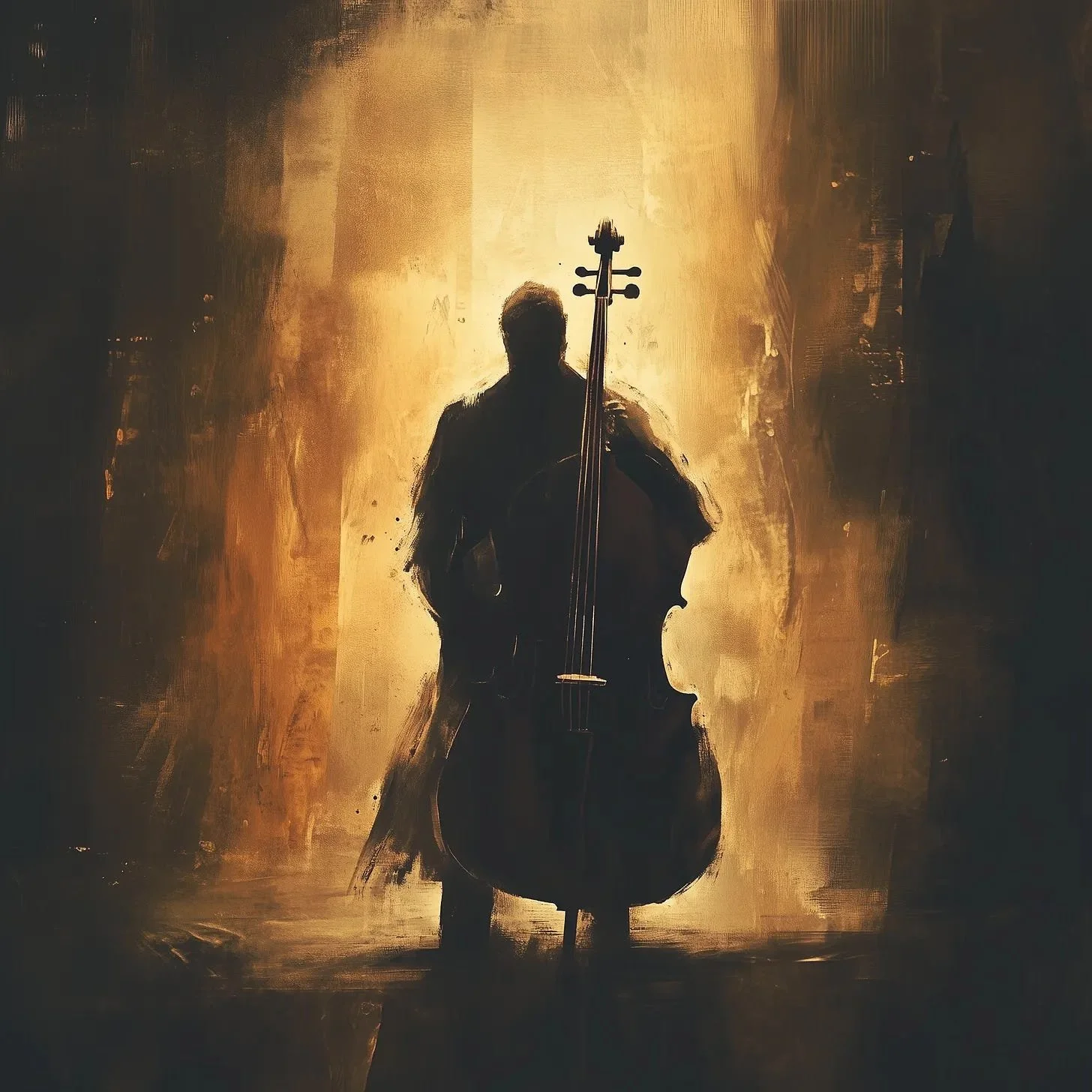
Few understand the intensity of the competition that exists between the elite orchestras of the world. The base salary for members of the New York Bicentennial Orchestra was $415,000 in 2026. Many orchestra performers, particularly the principals, received millions of dollars as compensation for their talents. Curiously, some individuals who never even graced the stage also received such high-level compensation. Rōnan Volkov had been paid $3,232,000 in 2025 and $2,788,000 the year before in exchange for “technical support.” He was on track to have his best year yet, and it all boiled down to economics.
Donor contributions to the “Big Four” orchestras (currently The New York Bicentennial, the Orchester der Wiener Tradition, Sankt-Peterburgskaya Simfoniya Iskusstv, and London’s Thames Philharmonic) were usually about equal when averaged over a decade. What imbalanced the revenue of each group, and therefore the caliber of their equipment and breadth of their tours, was the quality of their concert recordings. A truly excellent live recording could generate enough sales, ad revenue, and royalties to ensure an ensemble enjoyed continued membership in the “Big Four” for years to come, yet the creation of truly excellent concert recordings had been declining at an astonishing rate. Tonight’s performance of the New York Bicentennial, at a festival marking 250 years of American Independence, was rumored to be an unparalleled tour-deforce in orchestral excellence. Rōnan couldn’t let that happen.
Rōnan was a classically-educated cellist from St. Petersburg who had given up the performance scene when his first chair spot in a local youth orchestra was handed to another student, one of lesser skill, whose parents had made a sizable donation to the group. This variety of politics was common, and Rōnan found that he could redirect his love of the art into electronika. He adored the cramped basement shows and strobing lights. The dancing crowds of sweaty people wearing bright colors gave him so much energy. Rōnan had dropped out of an esteemed electrical engineering undergraduate program to pursue his music. But the money didn’t follow. He found himself in debt and without a reliable income, so he returned to the orchestra - this time as an audio engineer. The work provided decent pay, and for the most part, he avoided political jostling for prestige. All he had to do was make sure the mics were on, the levels were balanced, and the recording came out alright.
That was until one fateful, terrible evening. The Simfoniya Iskusstv Sankt-Peterburga had given an excellent performance. The ovation had lasted a full ten minutes. All the administrators assumed the recording would skyrocket on streaming services. Rōnan, though, had never seen anything like it before. The recording was terrible. All the mics were functional, there was no feedback, and all the levels were balanced, but at regular intervals, the music was disrupted by an intolerable, high-pitched shriek. He had thrown off his headphones in a rage after striving for fruitless hours to remove the interference, which had left him with a throbbing headache.
“It’s not your fault,” Alexander Losev, the orchestra’s ex-military operations consultant told him, “We knew this was going to happen sooner or later - now it’s time for you to earn what we both know you’re worth.”
Rōnan secretly feared Alexander and his bellicose management style. He was surprised to find the burly man’s hand on his shoulder. Soon he also found himself on the Lastochka train to Moscow carrying a small device. He activated this device, no larger than a case for glasses, during the performance of Moskovskoy Filarmonii, an orchestra that threatened to unseat the Simfoniyu Iskusstv Sankt-Peterburga as the country’s premiere ensemble. He had been successful because, upon his return, Alexander had handed him a white envelope filled with cash.
“I don’t know what to say, Alexander,” Rōnan cried when he saw how much he had been given, “this will pay my debt.”
“Please,” had been the reply, “call me Sasha.”
Soon Rōnan was traveling internationally. He was seeing the World and attending the very best orchestral performances. Tonight was to be the conclusion of Rōnan’s 2026 world tour - a tour that few knew existed. And it was shaping up to be quite an evening. Patrons had arrived at the historic theatre hours before the doors opened. Waiting in the lobby was an event unto itself. The city’s stars had assembled to rub shoulders and buy concessions in anticipation of a performance that would grant them bragging rights for months to come, regardless of whether or not they possessed the discernment to appreciate its quality. Everyone could appreciate the grandeur of the lobby, in which massive pillars of granite were illuminated by chandeliers dangling high above the masses. A murmur seemed to pass through the crowd as a wave. It was time for them to take their seats.
Rōnan approached his seat, or rather, one of his seats. It was standard practice for him to have several seats booked under assumed identities throughout the hall so that he might move freely during intermissions to avoid detection. The first seat he chose was located near the center, toward the rear on the lower level. A portion of the theatre’s enormous balcony extended overhead, its golden facade emblazoned with fascinating and complex depictions of a goddess filling a pot from a fountain as multiple nymphs danced around her feet. He took a seat near the middle of the row. After years of practice, he had perfected his manners for shimmying past guests who had already taken their seats - flashing a subtle smile at just the right moment to display his gratitude as they contorted themselves so that he might pass.
“Anthropology,” a woman in a red dress seated in the row directly in front of his own was saying to a younger woman, presumably a student, “I took a professorship at the University after my years in the field.” The younger woman nodded politely. A hush fell over the crowd. It was time to begin.
His hotel room was nothing special. A bed. A desk with a single chair. No Bible to be found. They had stopped leaving Bibles in the bedside tables of American hotel rooms sometime in the first decade of the 21st century, though Rōnan couldn’t pinpoint exactly when. He hadn’t eaten. Eating was something he avoided the day before an operation. It wasn’t anything to do with feeling ill from the nerves, though his anxiety was substantial, but he liked being hungry. The sensation of emptiness grounded him in the present moment and helped him focus. Sometimes he would wander through the city or visit an art museum. On this occasion, he wasn’t feeling up for any exploration.
Rōnan lay atop the pressed white linens of the cold bed for hours. He studied the popcorn texture of the ceiling. The room must have been renovated sometime in the late 80s. He made a mental note to demand a nicer room for his next job. Sasha would understand even if the other suits on the external advisory committee of the Simfonii Iskusstv Sankt-Peterburga did not. He spent the next hour or two working through breathing exercises. The practice helped him maintain the calm that would surely be challenged later in the evening. At exactly 3:02 PM he received a call from the hotel’s front desk.
“Parcel for you, sir” the impressively cheerful voice of the hotel receptionist chimed from the other end of the receiver.
“Very good,” was Rōnan’s practiced reply.
An unremarkable manilla envelope was waiting for him behind the white faux-granite countertop of the reception desk. He’d almost forgotten which of his four false identifications to show, but remembering it was the most recent, he handed over a card that appeared to satisfy the clerk. He also brandished a ten-dollar note. It seemed an appropriate tip for a hotel of this grade, though in the wake of the pandemic, it had become difficult to gauge what was expected in these scenarios. He had guessed correctly because the young man in the red uniform gave him a toothy grin and nodded.
Rōnan dumped the envelope’s contents on the now slightly rumpled surface of the hotel bed. Inside was a small black flip phone and an object roughly the size of a smartphone with a matte wire mesh over an entire side. There were also two identical copies of an AARP magazine with “Graceful aging over 70” written atop an image of a silver-haired man in a white sweater. Rōnan chuckled once. This must have been Sasha’s idea of a joke. First, he opened the flip phone, which turned on automatically. The device didn’t have reception, and a prompt for a password appeared. Rōnan exhaled in exasperation. He’d played this game before. It still irked him.
Carefully, he flipped through the pages of a magazine. Nothing. Just vaguely health-related articles and advertisements for entry-level Rolexes. Then he moved to the next identical magazine. Immediately Rōnan noticed a difference that should have been obvious. The edges were slightly crumpled. This copy had been read, or at least paged through. Quickly Rōnan identified four of the pages with minute dog-ear folds. Four pages, four page numbers, twenty-four possible permutations. Rōnan set to work typing these into the phone. Five minutes later he was in. There were three unread text messages saved on the phone. The first contained information about the performance: the time, place, and seat numbers. The second contained a shortened URL. The third said only “authorized.”
The information about the performance came as no surprise. There was only one major classical performance in the city where Rōnan had landed a day earlier. In his preliminary guesswork search, he had noticed a local youth orchestra was also scheduled for an end-of-semester exhibition, and he’d been surprised by his cynicism when he relished the thought of bringing world-class sabotage to their small stage. The URL, once typed into the secured browser of Rōnan’s own device, led to a PDF file with a ticket and QR code. He turned his attention to the other device. The black wire mesh surface was smooth and reminded Rōnan of the covering of any other high-end speaker. Along the thin edge of the device was a single button. When pressed, a tiny blue light appeared and a barely audible whine permeated the room. The sound seemed to reverberate throughout the space and was Rōnan not holding its source, he doubted that he would be able to tell where it originated.
The work of preparation was now complete. Rōnan returned to the magazine. Bored, he flipped through its pages. An advertisement for an “orchestral boat tour of European cities” caught his eye. He continued reading, “14 days of luxury travel with daily performances from world-class musicians.” For only $4,975 Rōnan could have his cabin on a boat cruise set to meander through the countryside, stopping at storied locales to enjoy the finest cuisine and entertainment the West had to offer. Had Sasha intended for him to see this? The thought unsettled him, and Rōnan returned to his breathing exercises.
Quietude fell over the crowd, as though every person in the theater collectively inhaled and held their breath. The noiseless vacuum that had suddenly opened was palpable. Rōnan loved moments like these. They hinted at the power music held, even in the era of unlimited streaming, to transform the human experience. A spark of guilt ignited in Rōnan’s chest. A man in a black tuxedo, the conductor, strode confidently to the center of the stage, and a roar erupted from the crowd. Immediately everyone was on their feet, and not a single note had been struck. Members of the orchestra clad in all black began streaming across the stage in orderly lines like tendrils of shadow stretching forth from beyond the curtain. After all had arrived at their seats the entire ensemble sat in one motion.
The conductor turned to face the audience. He was an impossibly tall man with long frizzy hair who motioned for the audience to calm down with controlled, fluid motions of his arms. He spoke in a thick French accent, “Thank you all for coming - tonight we have a wonderful selection prepared for you that I hope you will enjoy.”
The conductor profusely thanked the audience for their attendance and spoke at length about the power of music to illuminate the unknown and inarticulable. Rōnan nodded sleepily along with the words in the fashion of a well-seasoned patron of the orchestra. Then the conductor arrived at a topic that caused Rōnan’s droopy eyes to widen.
“And we shall conclude our performance of In Paradisum, with C Major,” he paused, “as Mozart wrote, death is a consolation.”
Rōnan gritted his teeth. Life was never so simple. How could death be a simple reprieve? He thought the minor chord was a more appropriate conclusion for the unfinished work. By selecting the established major resolution the conductor was kowtowing to the expectations of an undeserving public. Yet the audience applauded.
“Of course, they applaud,” Rōnan thought in disgust. He would feel no shame in what he was about to do.
He produced the small black device from this coat pocket and turned it over in his palm. It was cool to the touch. As the crowd’s roar began to die out and the string players raised their bows he ran his finger over the edge of the small button. The conductor raised his arms. Silence gripped the audience once again. Then his arms swung into motion and the strings launched into a complex melody of the overture. Rōnan took note of several cylindrical microphones hanging from the stage ceiling. There were many others affixed at regular intervals to floor-mounted brackets. They would no doubt be active. No obvious cables were running from the microphones, so Rōnan could only guess at the location of the audio engineer managing the recording. There had been no audio station set up midway through the balcony, a common position in smaller venues, and he assumed the engineer must be backstage or in a room hidden behind the rear wall of an upper level. That’s where resistance, should he face any, would originate.
As the strings reached a crescendo and the tympani erupted as though they were cannons, he pressed the small button, sure to keep the device hidden under a fold of his coat. A barely perceptible chime filled the space around him. Within a 30-foot radius, it was impossible to determine the source of the sound. Only audience members located far from Rōnan would have a vague sense of where the noise was coming from. The woman in the red dress in front of him looked around expectantly, and an elderly man to her right patted his pocket as though unsure of whether his device was making the sound. Quickly Rōnan switched the device off. Then he waited. The first tone was often the most jarring for the audience, but only in the same way that a vibrating phone or a beeping watch might be. By the third or fourth pulse of the device, it was no longer noticeable. The human mind has a remarkable ability to tune out noxious stimuli when it is sufficiently distracted.
Ten minutes into the performance Rōnan could activate the device without drawing even the slightest reaction from the crowd, provided he did so at moments when the orchestra reached forte. Some of the audience located particularly far away from him might still experience some agitation, though it would be less significant than a mosquito buzzing around their ears. He didn’t even bother looking to see who had noticed.
“Now,” Rōnan thought, “the real game begins.”
The only other person listening to the performance with any power to do something about Rōnan’s activity was the audio engineer. At this moment they were likely sitting in front of a computer screen displaying a multitrack recording - adjusting levels to ensure a balanced production. If the engineer was good at their job, and they were almost certainly one of the best in the industry, they would detect something anomalous in the higher frequency ranges of the recording. Their own ears would hear only the beautiful and the expected, yet it would be there, at the high end of each channel, a sudden clipping that quickly dove back into normal ranges. This effect would jump from channel to channel, depending on the notes being played at a given moment. It played havoc with the noise cancellation, limiters, and compressors that were surely being run on the recording. Rōnan didn’t expect that his disruptions would be recognized in time for the recording to be saved. But he was already behind the curve, though he didn’t recognize that fact.
Keisha Somerset had been on her feet from the moment her ears began to tingle. She detected a faint sound that reminded her of the electronic whine from an aging refrigerator she had replaced the year before. It also reminded her of a training scenario. Keisha cut her way to the back of the auditorium like a silent dart expelled from a blowgun and took a position near the door leading to the atrium, which had been closed when the performance began. From there she surveyed the audience and listened. A patron in the aisle seat next to her eyed her wearily. She smiled down at him in a polite, socially polished way to set him at ease. He cleared his throat aggressively but turned his attention back to the stage. Keisha returned to scanning the audience for anything out of the ordinary. “Look where they’re looking,” she reminded herself.
She’d played rat-catcher for the orchestra twice before. Once successfully. So little had to go wrong for the evening to be ruined. In both instances, she’d learned that the audience was often a better way of triangulating a saboteur’s position than any sophisticated gadget. They could be vicious, turning like a hungry predator toward prey that had revealed its presence by rustling through foliage or misplacing a step. They were eager to oust the heretic who had disrupted the sacrosanct stillness of the hall. Their gaze would lead her right to the person most likely to cause a problem, yet they weren’t revealing any clues now.
A crackling in her ear marked the start of a message delivered by the single headphone she wore. “Not sure what’s causing it,” the disembodied voice of a young man said, “but something is going on.”
Keisha wondered if the recording was already irreparably damaged, but that wasn’t her job. Her sole objective was to identify and stop the source of the disruption. She removed a modified smartphone from her pocket and tapped at the screen. An icon resembling a compass rose, outlined in a luminous chemical green appeared. A small arrow in the center pulled weakly. She shielded the screen so that it wouldn’t disturb anyone around her; the tempo of the music was increasing and thickly-layered harmonies began to swell through the hall. All sat in rapt attention. Suddenly the buzzing in Keisha’s ears returned, and the arrow in the center of her phone screen snapped brightly to life. It started to swivel as if on an axis and eventually settled on a position somewhere to her right. She scanned the crowd. On her other side, away from the sound, several patrons looked in her direction, their gaze passing by her and landing somewhere in the middle of the theatre.
Keisha pressed her finger to the earpiece and whispered, “Confirmed.”
She scanned the middle of the theatre near the rear of the hall for anything that might catch her attention. No such luck, it was a packed house. Aside from a few well-behaved children who couldn’t possibly be involved, most people in the seats Keisha cast her eyes over were suspect. There was an elderly couple whose expressions suggested an enjoyment of the music that couldn’t be feigned. She ruled them out. That left about fifty people. Discretely, she stared. She exhaled and tried to relax, as she had been trained, and allowed her focus to soften and her field of vision to expand. Over several minutes she became more attuned to the small movements of the audience members. Her focus would instantly narrow on an individual if they fidgeted in their seat or brushed a loose strand of hair.
Rōnan noticed Keisha about three minutes before Keisha noticed him. When he’d seen the neatly-groomed woman in a sleek black dress standing by the rear door of the theatre he hadn’t thought anything of it at first. However, she continued standing there glancing out over the crowd - away from the stage. This wasn’t typical behavior. Rōnan decided his best course of action was to remain completely still, and in fact, this is what gave him away. As Keisha watched the crowd, she grew accustomed to the rhythmic movements of human fidgeting. Everyone in the crowd, occasionally, would straighten their hair or scratch their ear. They’d muffle a cough with their fist or gaze up at the ceiling, trying not to sneeze. The absence of movement began to attract her attention. The stillness seemed to have an epicenter, a young man at the center of a chasm of squirming people. He had Slavic features, and his oily hair was slicked back.
They made eye contact. Rōnan immediately felt uncomfortable. The woman’s cold gaze communicated something alien to him. There was intention mixed with a sort of frenzied intensity. He decided to relocate during the intermission. He slowly opened a copy of a program booklet he had received from an usher and pretended to inspect it closely. His eyes darted across the letters without them reaching the level of conscious awareness, and his pulse began to quicken. Occasionally he would try to sneak a glance in the woman’s direction, and each time he felt her gaze return to him, even if it had drifted away slightly. “Not good,” he thought, “but it’s not evidence of having been made. I’ll relocate during the intermission.” The music began to swell. Brilliant trumpets cut through a soft cushion created by the lower woodwinds and strings. The percussion thundered and hurried toward a culmination. There was a back-and-forth discussion between the trombones and the violins before the orchestra joined in a grand unison and struck the final chord of the first half.
The conductor cut the sound off with a sweeping motion and then held his hands in the air, as though grasping silence itself. The pause hung ponderously in the air. The sudden absence of sound felt almost material, as though it were solid and pulsating. Rōnan took a deep breath. The music had, for the briefest of moments, completely robbed him of his focus on the mission. Then the conductor lowered his hands and the crowd was on its feet. They cheered, and their applause rumbled throughout the hall. The cacophony was punctured at intervals by high-pitched whistles. Rōnan fought his impulse to begin pushing his way toward the lobby. He reminded himself that this would only attract attention. With grating, painful slowness the applause died, and the rows began to empty as the throngs started to wind their way toward the restrooms and concession stands. Rōnan felt as if he were a cog in a set of massive gears. As he took inching steps toward the aisle he kept his gaze straight ahead, not daring to check whether or not the woman had moved. The device felt heavy in his pocket.
“Are you enjoying your evening, sir?”
The question caught Rōnan off guard, though he had been half-expecting it. Her voice was subdued and articulate, cold and clear. It was the tone of someone who worked in a corporate office and had been passed over for one too many promotions. Her black dress was strangely captivating, but he couldn’t immediately identify why.
“Quite well,” Rōnan replied, activating a practiced charm he reserved for close shaves.
“I wonder if I might have a . . .” the woman began.
“Sorry,” said Rōnan, gesturing at his stomach, “nature calls.”
He made little effort to conceal his escape. He darted toward the lobby just as an elderly man with an assisted-walking device passed in front of the woman. With that, Rōnan was gone. He slipped out of the theatre into the lobby, which had already filled with hundreds of other patrons. As he walked, he checked the alternative seats that were available to him. One on the left side of the upper balcony seemed as though it might be a good choice. A sweeping two-sided staircase loomed to his right, and he cut through a torrent of people leaving to the atrium. About halfway through the current of bodies, Rōnan realized it would be better to return to his new seat closer to the end of intermission. This would give his pursuers less time to find his new position and force him to leave before the music started. Rōnan stopped pushing past people and instead allowed the mass to drag him along.
They deposited him in front of a row of concession kiosks where the crowd thinned. Rōnan glanced around and tried to look composed. “The woman who spoke to me earlier may have just been asking about my thoughts on the show,” he thought to himself, and then, with a scornful laugh, “maybe she was interested.”
To kill time and avoid detection, Rōnan started a conversation with a couple by pretending to recognize them from a past ski holiday and asking about their son. Of course, he’d had their names wrong, and the location of their meeting, but once the couple started talking about their son, they were more than happy to overlook the inconsistencies of Rōnan’s memory.
“It must have been Florence,” the woman had said.
“Ah, Florence,” Rōnan replied, “of course, but tell me more! Did you say Yale?”
“Yes, he just received the letter,” the man practically cried.
They continued in this manner until only ten minutes remained in the intermission. Rōnan excused himself, but only after taking down the woman’s number so that he might call to check in on her son, Berty. He considered himself lucky to have stumbled across two people who loved to yap. Yet the number of people in the lobby was dwindling. He returned to the great staircase he had seen earlier and began to climb. Midway up the first flight, he glanced over his shoulder at the crowd. Though he couldn’t be sure, he thought he glimpsed the woman in the black dress facing in the opposite direction. He returned to his ascent. The stair cut its way back and forth up two flights to a private club, separated from the rest of the landing by a doorman with a velvet rope, and then two more flights upward to the concourse leading to the upper balcony.
He breezed past the usher near the entrance to the theatre who was occupied assisting other patrons to their seats. His second reserved seat, located in the front row of the balcony, was very easy to find. It placed him between an elderly woman in a flowing green dress whose flowery perfume gave him an immediate headache and a young boy dressed in a comically oversized suit. Rōnan nodded to the woman and mumbled something about missing the first half. She made a distasteful clicking sound with her lips but didn’t continue the conversation. He felt painfully exposed. Why had Sasha thought the first row was a good option? “Not very discrete,” Rōnan thought.
His fears were immediately compounded as he noticed an older man in an impeccable suit standing near the end of the row, leaning against the balcony, touching his ear, and appearing to whisper a few words. There was something about his suit that gave Rōnan pause. Though black, the color had a certain iridescent depth and slight shimmer. At once Rōnan recognized it to be made of the same material as the dress of the woman who had spoken with him earlier. Their eyes locked, and Rōnan cursed himself for not being more discrete. The man took a step forward. Then another. Rōnan was on his feet. He wove around patrons taking their seats and pushed his way up the long aisle to the concourse. He didn’t have to look to know the man was following.
Rōnan cut sharply to the right after reaching the concourse where only a few stragglers remained. He took the stairs down two at a time. The best option that Rōnan could imagine was somehow evading detection and returning to his original seat just as the second part of the performance began, but he wouldn’t be so lucky. As he rounded the final flight of stairs he saw the woman in the lobby, and she immediately spotted him. She began walking purposefully from her position in the middle of the lobby toward the stairs. “Shit,” Rōnan hissed under his breath. He turned on his heel and climbed back to the second terrace. The staccato click of patent leather shoes on marble descended from the stairs above him. His gaze shot to the right. The velvet rope that marked the boundary to the club was still in place, but the doorman had turned his back and was observing the theatre through unglazed windows on the far side of the room. Just inside, on the left, was a bar where several patrons were lined up waiting for cocktails.
The click of the shoes grew louder and was joined by a second spiccato melody ascending from the opposite direction. Rōnan ducked under the velvet rope and slid behind the bar. Two bartenders worked furiously at the far end and didn’t notice him. He slipped off his coat to better match the white shirts of the other bartenders and tucked it under the bar next to a row of clean glasses and several Boston shakers. Now standing, he found himself face-to-face with an annoyed-looking woman who fanned herself with a program pamphlet.
“I’ll have a vesper martini,” she said, “and hurry . . . I’ve been waiting.”
Without much time to think, Rōnan slipped into character. Gin, vodka, he found most of the ingredients quickly. Then scanning the rows of bottles along the back bar, he turned to the woman and said, “damn, no Lillet Blanc.”
“Oh,” the woman exclaimed in exasperation. Rōnan felt as though she might be about to launch into a tirade.
“I see dry Vermouth,” he said with a cheeky smile, “and a few drops of bitters would substitute nicely.”
The woman nodded, and Rōnan set to work. Just as he was setting her cocktail in front of her both individuals clad in iridescent black evening wear entered the room. The two approached the doorman who had returned his attention to the club entrance. Words were exchanged rapidly, and the doorman scratched his head, confused. Rōnan retrieved his suit jacket from beneath the bar and found the sleeve had become quite damp. He darted closer to the other bartenders, who took no notice of him, and pushed through a set of double doors near the far end of the bar labeled “staff only.” Inside there was a large kitchen with chrome appliances. Individuals in all white swerved back and forth. One of them looked directly at Rōnan, who smiled and nodded confidently. He walked forward as though he were on an important mission. The chefs continued their work and no one moved to stop him. A few moments later he found a service hallway that adjoined the kitchen.
The inside of the hallway was utilitarian and lacked the striking opulence of the interiors designed for patrons of the symphony. There were very few doors, and no one was around. Rōnan took a deep breath, relieved to be temporarily out of the spotlight, but he knew he had only moments before he was discovered. He started running along the hallway. The first several doors he passed were locked, and he continued forward. The hallway bent suddenly at a right angle and several short flights of stairs led downward. There were no more doors. The prospect of discovery weighed heavily on him as he passed under white incandescent lights. After running along what felt like the entire length of the building, there was a half flight of stairs leading upward and another sharp turn to the right.
A woman in a black evening gown sat on the floor next to a door propped open with a shoe. Rōnan’s heart skipped a beat, but he quickly saw this was not the person pursuing him. He stood there, dumbstruck, and noticed that the woman was crying softly. She noticed him, sniffled, and then wiped under her eye where her makeup had run. A badge affixed just above her breast was emblazoned with the name, “Albena Delaney” in gold cursive lettering. The name seemed familiar.
“Who are you,” she began to ask, but at the same moment Rōnan said, “Are you alright ma’am?”
Suddenly he remembered where he had seen the name before. It had been listed in the orchestra members, under the cellos. There wasn’t a profile written about Albena so he knew she wasn’t one of the principals. She was rising to her feet just as a crazy idea gripped Rōnan. He didn’t have many options at this point, and while he could have chosen to flee, that would have resulted in an incomplete mission. Rōnan probably wouldn’t be paid for sabotaging just the first part of the performance. There wasn’t time to think. He thought he could hear footfalls further back along the hall.
Again, she asked, “Who are you? Are you sure you should be back here?”
Rōnan closed the distance between them before she could react. He produced a small 5mL syringe from his pocket and jabbed it into the woman’s neck. A gasp escaped from her lips as she tumbled forward into his arms.
“Sorry miss,” he said reassuringly, “you’ll be fine in an hour or so.” Her eyes closed.
“Oh my god, what am I doing,” Rōnan screamed internally as he peaked his head through the open door with Albena fast asleep in his arms. The door led to a vast darkened room. He could hear chatter from what he assumed must be other members of the orchestra. The wall was lined with shelving that held numerous boxes, and handcarts with other backstage equipment were scattered throughout the room. The opposite side was split into several tiers supported by metal scaffolding. Each tier was approximately half of Rōnan’s height, and on the topmost tier, he could see groups of orchestra members conversing. In the far corner, along the upper tier, Rōnan could make out the lights of the stage. They were far enough away that they hadn’t noticed his awkward, encumbered entrance.
Rōnan carefully set Albena down next to the first tier and pulled her sleeping frame into the storage space. She snored softly.
“You’ll be fine,” he whispered to no one.
Then he threw his jacket back on and strode into the room, making no effort to hide, and found his way to a set of stairs that connected each of the three tiers. He walked to the topmost. There was no hiding now.
“Who are you,” a member of the orchestra with thick creases on his forehead asked as Rōnan passed.
“Richard,” he said.
“Where is Gerard,” Rōnan asked urgently before the man could ask any more questions, referring to the conductor whose name he had also retained from his perusal of the evening’s program. The man to whom Rōnan spoke let out something like a grunt of disbelief but gestured nearer toward the stage, where a tall lanky man with impressive hair, the conductor, spoke animatedly to a woman holding a clipboard. Rōnan thanked the man and strode confidently toward the conductor. Droplets of water from the bar fell from his left arm as he walked. The conductor spoke in hurried French. It took him much longer than Rōnan had expected to capture the conductor’s attention. When he finally did, the conductor exclaimed, “And who the hell are you?”
“Richard Garrettson,” Rōnan replied, already slipping into character, “Albena is indisposed, I am her second.”
“I don’t remember you from practice,” Gerard said in a tone that sounded more disgusted than disbelieving, “but of course, Albena is indisposed! When is she not?” Rōnan nodded knowingly.
“Where is your cello,” the man boomed, repositioning himself so that he stood between Rōnan and the stage with his hands on his hips, “and why are you wet?”
“She said that I might use hers.” Rōnan lied, “She said it is already on stage and would cause less fuss.” He didn’t address his damp sleeve.
The conductor scowled and appeared as if he were about to reject Rōnan’s explanation. Then a chime sounded on the conductor’s phone. He eyed Rōnan for another moment and said, “Fine, I can’t keep track of you seconds anyways.”
“Time to go,” the conductor yelled to the orchestra before striding onto the stage ahead of them.
The rest of the orchestra had already formed orderly lines. Rōnan had no sense of where he should stand. He chose a man he supposed was as likely as anyone to play the cello and joined the procession. As they marched onto stage the lights were blinding, but his vision soon adjusted. It turned out that he had lined up with the trombones, but they were positioned near enough to the cellos that it made little difference. This worked in his favor, as the cellos arrived just before the trombones, and the seat that Albena should have occupied was obvious. Rōnan slipped carefully between two stands and took a position before the empty chair. He retrieved an exquisite cello that occupied a stand directly adjacent to the chair. The warm wood felt familiar in his hands, and countless hours of practice in Rōnan’s younger days came flooding back to him. Remembering his classical training, he snapped to attention and stood as the rest of the orchestra took their places. Rōnan could feel the eyes of the other cellists on him, no doubt wondering where Albena was and about the newcomer who had joined their ranks.
After moments that seemed to stretch for hours, the orchestra had all taken their positions, and the conductor motioned for them to be seated with a swoop of his arms. The crowd burst into thunderous applause. A sudden rush of sentiment caught Rōnan in its grips. He had so missed the stage. There was nothing like the energy of the crowd. A binder of sheet music was open on the stand in front of him. Each of the measures had been numbered in impeccably clear handwriting. “Remember to count, remember to count,” Rōnan thought, repeating a mantra that had served him well. Whereas the preceding moments had lasted for eons, the applause seemed to pass in a wink, and the conductor soon had arms raised and was making eye contact with all the principals. With a gesture to the lead violin, a tuning note was struck. The entire orchestra joined in, and Rōnan felt his arm moving the bow fluidly across the strings, as though propelled by an otherworldly force entirely outside of his conscious control. The opening countermelody he would carry as a cello on the third part was already weaving through his cranium, waiting to be given life. He felt a tear come to his eye.
Soon the tuning note was cut, and the conductor turned to the crowd to say another few words. This time he was brief, and almost before Rōnan could react, the conductor had turned back to face the orchestra. Rōnan could have sworn that the conductor shot him a quick smile before launching into the opening meters. The same disembodied force that had carried his bow earlier now drove his fingers across the strings – his hands trembling with a well-practiced vibrato. It felt as though a thin layer of ice that had accrued over the years was breaking away from his fingers, which now resonated in a vibration he hadn’t known since his youth.
Rōnan was surprised to learn he could keep up with the music. On rare occasions, a difficult passage would move more quickly than his fingers allowed. He would feel himself falling off the melody, almost in slow motion, and immediately remove the bow from the strings. The other cellos playing third were sufficient to carry him through those moments. All the while, the device he was supposed to be using to disrupt the recording felt like an icy brick shoved carelessly down his pant leg. He had a mission to complete, though now the thought of pressing the small button on the right-hand side carried with it a feeling of dread. During one of the longer sections of rest, Rōnan briefly wrestled his feelings into submission. He slipped his hand into his pocket and removed the device, placing it delicately on his leg and balancing it there.
He chanced a look at the audience, an internal marking of time drowning out his other thoughts. A lump formed in his stomach. He saw that the couple clad in iridescent black stood together near the front row, but off to the side so as not to obstruct anyone’s view. They both watched him, but there was nothing they could do. Realizing he had temporarily won, Rōnan’s hand crept to the device. A sidelong glance from the cellist next to him caught him off guard, and his hand shot back to the neck of the cello. Rōnan assumed that it must appear as though he were trying to send a text message during the performance - a laughable if less severe offense than the reality. Rōnan tried to activate the device several more times throughout the movement, but each time he stopped. On one occasion his next entrance snuck up on him, and he was forced to resume playing sooner than he had expected. On another, the solemn grace of the composition overwhelmed him with emotion. How could he ruin something of such beauty?
It was as though time had become dislodged from its usual rhythm, and the end of the final movement approached. The ending major chord was clearly marked, and the alternative minor chord ending was covered by a large black “x.” The conclusion was upon him, his chance at completing his mission had been consumed by a force that he could not identify, one that existed somewhere on the same spectrum as reverence and awe. When the final chord arrived, as a final gesture of defiance, Rōnan played the minor chord ending. The voice of his cello was but one in a hundred, suggesting a somber alternative to the grand conclusion struck by the orchestra. It would not be heard. The audience leapt to their feet and cheered. Some wept, others whistled. Cries of “bravo” rang throughout the hall.
The conductor gestured for the orchestra to stand. At that moment time seemed to snap back into its regular cadence. Rōnan was acutely aware that he had failed his mission, and that he certainly had the attention of the conductor, the members of the orchestra around him, and security. The orchestra performed a series of bows, which Rōnan joined in mechanically. At last, the first performers began to file off stage. Rōnan set the cello back on its stand and rushed off stage. He plunged back into the darkness of the wings and searched desperately for an exit sign. There was one along the far wall. He jumped down the tiered scaffolds while the sound of the audience still echoed in the background. The exit sign hung luminously in red and white before him. Below it was a simple metal door. He lunged at the door knowing security was just steps behind him.
A familiar voice drifted softly behind him, “Ah Rōnan, quite the performance.”
There was a wet thud as the handle of a pistol smashed into the back of his skull. Rōnan was unconscious before he hit the floor.
Sometime later Rōnan awoke, violently. The room was dark. His arms and legs were restrained. Somewhere overhead a bulb winked to life. Sasha walked forward out of the darkness. His heavy rubber boots made a thwacking sound against the concrete floor, which was cold against Rōnan’s exposed feet.
“Amazing, really,” Sasha said, “for you to get up on stage. Bravo.”
“I had no idea you were still fit to perform,” he continued, “and color me impressed by your cello playing, though by your espionage skills, less so.”
Sasha laughed heavily. Then he wheezed. His smoking was catching up with him. Even now the scent of burnt cigars hung in the air around him.
Rōnan groaned. His stomach hurt and he felt very dehydrated.
“No matter,” Sasha said, “I am curious, why didn’t you ruin that second part? You could have, easily. I know. I was there. On stage would have been the perfect positioning, and security couldn’t have touched you without ruining the performance themselves.”
Rōnan sputtered, moaned again, and whispered, “the music.”
“Oh, don’t be romantic my boy,” Sasha boomed. He let out another chuckle, though this one was much less enthusiastic.
His demeanor grew serious, “It’s all for the best you didn’t ruin it. The digital tracks for the second half should be usable.”
“Why do you care,” Rōnan asked quietly.
“Well shortly after you left, I was . . . contacted . . . or rather . . . hired,” Sasha continued thoughtfully, “discretely mind you, by someone more compelling than the suits of Simfonii Sankt-Peterburga.”
“Huh,” Rōnan choked. His head was still spinning.
“Money,” Sasha yelled, “when I say compelling, I mean they paid me! What, did you get brain damage when I knock you out?”
“No, I just . . .who.” Rōnan trailed off
“Who knows, they were very discrete, and who cares, not me,” Sasha continued, his tone returning to one that was almost jovial, “I guess the people who love music are willing to pay even more to make sure their precious recordings aren’t ruined.”
Rōnan didn’t know what to make of this statement. He let out a long, strained sigh.
“I ruined the first half of the performance,” Rōnan offered after a long pause.
“No harm done,” Sasha said, “I gave our new employer some expert counsel, and we did this one the old-fashioned way – analog.”
He continued, “Your device may have fiddled with the fancy filters and whatnot on the digital version, but the analog version will come out just as it sounded in the theatre, how do you say, right as rain.”
“I missed the hiss of the old recordings anyways,” Sasha concluded.
Part of Rōnan was relieved. Something had been reawakened in him when he set foot on stage. He hadn’t realized that he was still so transfixed by performance, and he hadn’t expected to feel such internal resistance to doing something as simple as pressing a button. Another part of him was horrified.
“What do you mean our new employer,” Rōnan asked, emphasizing “our.”
Sasha cleared his throat, and the scent of liquor wafted across Rōnan’s face, “Erm, well, they were very upset by the damage you did manage to cause. As you said, the digitals of the first half were destroyed.”
“That reflects poorly on me,” he continued, “and well, they wanted me to deal with you.”
Rōnan swallowed hard.
“First I thought to kill you and be done with it,” Sasha gestured so that his hand resembled a gun, pointed it at Rōnan’s head, and said “Pop.”
Rōnan flinched. He couldn’t help it. Sasha was joking, but he was also deadly serious.
Sasha leaned in close to Rōnan’s face so that the angry slits that passed for his eyes were aligned with Rōnan’s.
“But I sent you here, and though I will happily betray Simfiniyu Iskusstv, it would be unprofessional to . . .” Sasha paused, cleared his throat again in a single short grunt, and then said, “so I told them I need you.”
“No,” Rōnan barked, “I’m done with this shit! No more!”
“Then we go back to the whole killing idea,” Sasha replied with an abrupt, punctuated laugh. He produced a pistol from a holster on his hip and twirled it in lazy circles before clinking the metal barrel against the arm of the chair to which Rōnan’s was tied. He could feel its cold steel.
Sunlight poured in through the window of Rōnan’s starboard-side cabin, and the lapping of waves against the ship’s hull gently ushered him to wakefulness. It had been three months since Sasha and Rōnan had last spoken. Sasha’s final words to him had been true, “I hear Prague is lovely this time of year.” Rōnan rolled to his side and opened his eyes. Keisha lay in bed next to him, still asleep. Her breaths were quiet and rhythmic, in perfect time with the lapping of the waves.